Table of Contents
On a frosty December morning, a solar panel on a roof is doing something many homeowners don’t expect: working.
It’s one of the most common questions people ask before they go solar. With short days, grey skies and the odd cold snap, do solar panels work in winter at all? The research gives a clear answer — yes, they do. They just produce less, and the reasons why are more interesting than you might think.
The short answer: Solar panels work in winter because they run on daylight, not heat. Output drops in the UK’s darker months mainly because days are shorter and the sun sits lower in the sky. Cold weather itself helps panels work more efficiently, and most of a system’s yearly generation comes from spring to early autumn.
Here’s what the science says, and what it means for your home.
Why solar panels produce less in winter
Researchers agree on the main culprits, and none of them is the cold.
Shorter days and a lower sun
The biggest factor is simple: there’s less daylight to work with. In winter, the sun rises later, sets earlier and stays low on the horizon. Researchers at the University of Twente point to that low angle as a key reason output falls — sunlight arrives at a shallower angle, and with less intensity, so fixed panels catch less of it.
That cuts both how long your panels generate each day and how hard they work while they do. Studies of winter PV yield show day length and sun elevation are the dominant drivers of the seasonal dip.
More cloud cover
Winter in northern Europe tends to bring more overcast days, which further reduces the light reaching your panels. Clouds scatter sunlight rather than block it completely, so panels keep generating from diffuse light — we cover this in detail in our guide to how clouds and rain affect solar output.
How much electricity do solar panels generate in winter in the UK?
Less than in summer — sometimes a lot less. In the Netherlands, which sits at a similar latitude to southern England, the University of Twente found that panels produce only around 10% of their summer output in the depths of winter.
That sounds stark, but it’s only part of the picture. December and January are the low point. Output climbs steadily from February, and the long, bright days between spring and early autumn do most of the heavy lifting.
What matters for your energy bills is total generation across the year — and that’s exactly how installers size a system. To see what a system on your roof could produce month by month, try our solar panel output calculator.
Do solar panels work better in summer or winter?
Summer wins on total output, by a long way. Longer days and a higher sun mean far more light reaching your panels.
But hour for hour, winter has a surprising edge. Solar panels convert light into electricity more efficiently when they’re cool, so a clear, crisp winter day can be one of the most productive per ray of sunshine. On a hot July afternoon, by contrast, panels can lose some efficiency as they heat up.
Put simply: summer delivers volume, winter delivers efficiency. Your system benefits from both.
Does cold weather affect solar panels?
Yes — in a good way. Solar cells lose less energy as heat when they’re cold, so they turn more of the light they receive into electricity. A Sandia National Laboratories study reported by pv magazine found that low temperatures at its Vermont test site increased system operating efficiency.
It’s why a bright, frosty morning is good news for your panels. The limiting factor in winter is the amount of light, not the temperature.
Do solar panels work in snow and frost?
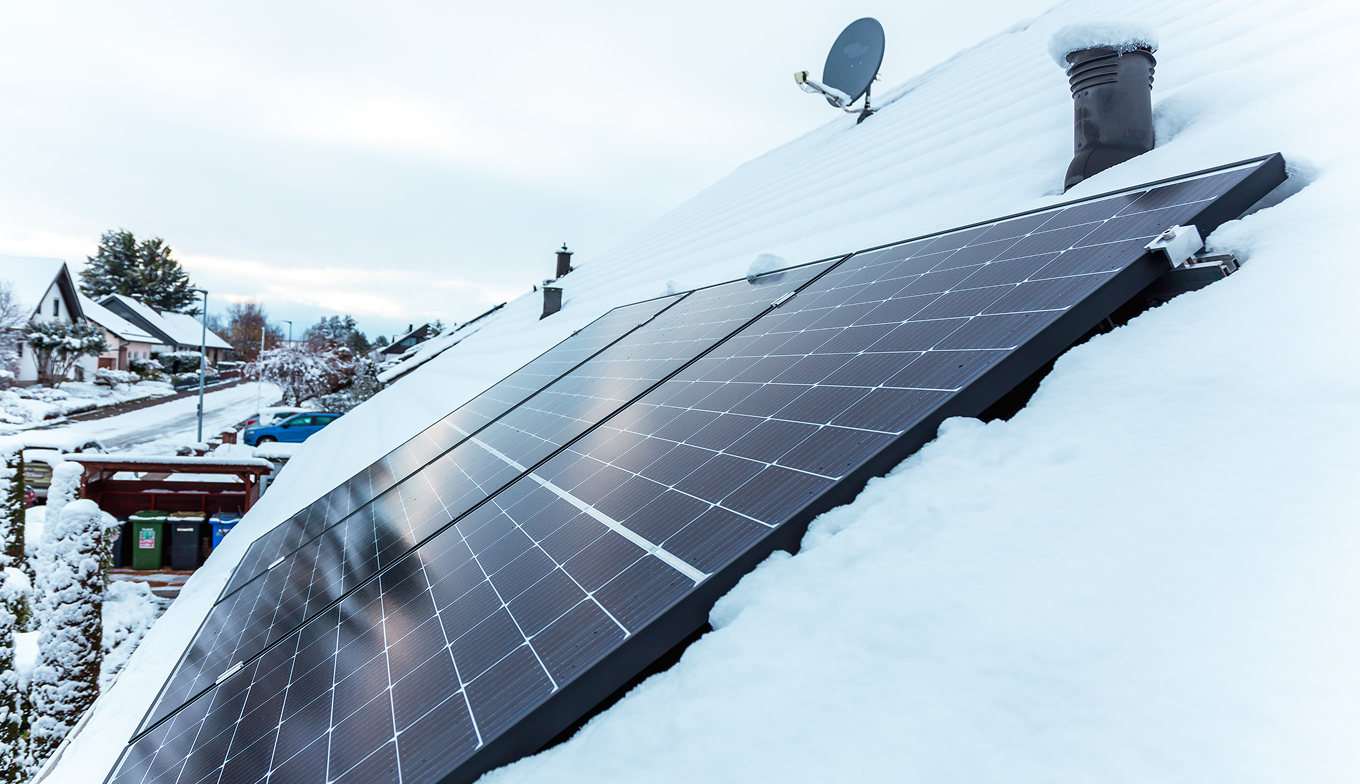
Snow is the one winter condition that can stop panels from generating energy — but only while it covers them.
A 2019 literature review in Renewable and Sustainable Energy Reviews found that snow cut annual generation by less than 10% in most climates studied. Monthly losses in winter were usually higher than 25%. In the snowiest places, Sandia’s research on snow and PV performance shows the worst months can be far heavier.
For most UK homes, that’s a small concern. Heavy, lasting snow is rare across much of the country, and panels are tilted and smooth, so snow tends to slide off as soon as the sun warms them. Light frost usually clears within the morning.
There’s even an upside. Fresh snow on the ground reflects sunlight back up. In the same Sandia field study, bifacial panels — which capture light on both sides — performed as much as 40% better than standard panels during peak winter months. Bifacial panels are still uncommon on UK homes, but the effect shows how much winter light is bouncing around.
What to do if your panels are covered: leave them. Never climb onto the roof or pour hot water on the glass, which can crack it. Our solar panel maintenance guide covers safe care through the year.
Are solar panels still worth it if winter output is low?
For most UK homes, the winter dip is already part of the plan. Installers estimate a system’s value on a full year of generation, not its weakest month.
In summer, your panels often produce more than you use. That extra electricity can be sold back to the grid through the Smart Export Guarantee (SEG) — a scheme that requires larger energy suppliers to pay you for the power you export. In winter, you’ll lean on the grid more, especially in the evenings.
Across the year, the two balance out. The question isn’t whether your panels produce less in December — they will — but whether the whole year delivers potential savings for your household.
How to get more from your solar panels in winter
Research points to a few practical levers. Some are decided when your system is installed; others you can use every day.
Add battery storage
Winter daylight is short, and demand peaks after dark. A battery stores the electricity your panels make during the day so you can use it in the evening, rather than exporting it cheaply and buying it back at peak rates. Find out more in our guide to solar and battery storage.
Pair it with a smart tariff
Some tariffs offer cheaper electricity overnight. With a battery, you can charge up on low-cost power while you sleep and use it during the expensive evening peak — handy in the months when your panels can’t fill the battery alone.
Get the angle right at installation
Research on winter solar yield highlights tilt as one of the biggest design levers. Steeper panels catch more of the low winter sun and shed snow more easily. South-facing roofs still give the most energy over a year, while east–west layouts spread generation more evenly through the day. A good installer will weigh this up for your roof.
Keep panels clear of shade
With the sun so low, a tree or chimney that’s harmless in June can cast a long shadow in December. It’s worth raising any shading concerns during your survey.
Frequently asked questions
Do solar panels work in winter in the UK?
Yes. Solar panels run on daylight, so they keep generating through the UK winter. Output is lower because days are shorter and the sun is lower, with December and January the weakest months.
Can it be too cold for solar panels?
No. Cold temperatures actually help panels work more efficiently. They’re built and tested to cope with freezing conditions far harsher than a typical UK winter.
Should I clear snow off my solar panels?
Usually not. Snow tends to slide off tilted panels once the sun reaches them. Never climb onto your roof or use hot water, which can damage the glass.
Should I add more panels to make up for winter?
Not usually. Sizing a system for December would leave it oversized for the rest of the year. A battery or smart tariff is normally a better way to make the most of winter daylight.
Do solar panels need direct sunlight?
No. Panels also generate from diffuse light on overcast days. Read more in our guide: do solar panels work on cloudy days?
Solar that works all year — without the legwork
Winter output is lower, but solar is a year-round investment in a greener, future-proof home. The bigger question for most people is where to start.
That’s where Switch Together comes in. We bring households together to get competitive prices on solar panels and battery storage, fitted by independently vetted installers. You get a personalised recommendation for your roof, with no commitment required — we handle the hard part.