Table of Contents
Understanding whether or not to invest in solar and battery storage for your home can be tricky. This is especially true for UK homeowners facing rising electricity bills, pressure to be more sustainable, and uncertainty about what home-energy upgrades really deliver.
We know installing solar panels and upgrading to batteries can feel like a huge financial, technical and emotional decision. That’s why we’re breaking down everything you need to know about solar panels with battery storage. From what the benefits are, to how they integrate, and what costs you might expect, to help you make the right decision for your household energy needs.
If you’ve been seeing others installing solar and battery storage and thinking, “Could this work for me?”, then this article is for you.
What are the benefits of solar panels with battery storage?
More energy independence
Solar panels generate electricity during the day, when the sun is out, but many homes use more power in the evenings or early morning. This means that without storage, a lot of the solar output gets exported or wasted.
With a battery, you can store any extra energy from your PV and battery storage setup, and use it later when the sun isn’t shining. This means you increase your energy independence by using more of the energy your solar panels generate.
You’ll be less reliant on the grid for expensive energy when rates and demand are high, and reduce the energy you export to the grid when your compensation is low.
Cost savings and control over energy bills
With solar and battery storage you will use more of your own solar energy and less from your energy supplier, making you a direct saving. For example, a 2024 study from the MCS Foundation found homes with solar panels with batteries save £1,341 annually in bills in a three-bed semi-detached.
You’ll also avoid buying power from the grid at peak times when tariffs are high. Plus, there is currently a 0% VAT relief on solar and batteries installed with or added to solar panels in Great Britain until 31 March 2027. This will bring down the total upfront cost.
You may even earn income through the Smart Export Guarantee (SEG) for exporting surplus, though this is often lower than what you’d pay for grid electricity, so storing may provide better value.
Besides financial savings, the increased energy independence of having your own solar panels with battery storage brings peace of mind, more stability over your bill payments, and reduces your exposure to rising grid prices.
Environmental Benefits and Energy, and Resilience
A solar and battery storage home setup means less reliance on fossil fuel-based grid electricity, reducing your home’s emissions.
Having a battery can also provide energy resilience. You may get backup power in case of outages, though it’s recommended to double-check if your system supports this.
Property Value & Future-Proofing
Installing PV and battery storage may add value to your home as buyers look for energy-efficient homes.
With regulations likely to tighten with new home standards, grid pressures, and time-of-use tariffs, having a clean energy system already in place could future-proof your property.
How do solar panels with battery storage work together?
Solar photovoltaic (PV) panels generate electricity which flows through an inverter which converts this into power for your home. During especially sunny periods like the longer days of summer, your solar panels may produce more electricity than your home can immediately use.
A battery can store this surplus energy for later use, when your home is using more power than your solar panels produce — for example, evenings, cloudy days, or peak periods.
In most standard UK solar PV systems, any electricity your panels produce that your home isn’t using automatically gets exported to the grid.
By integrating solar panels with a battery, you can keep and use more of the energy you generate at home, helping you make the most of your system.
System Integration: How Solar Panels with Batteries Work Together
Here’s how the PV and battery storage balance energy use throughout the day:
- Your solar panels first power your home directly.
- Any extra electricity flows into the battery for storage.
- Once the battery is full, any remaining surplus is exported to the grid.
This setup allows a well-sized battery to capture a lot of your daytime solar output for use later.
Your inverter and monitoring software help manage this flow automatically. Most modern systems prioritise solar energy to the battery first, then from the battery to your home, and finally export any leftover energy.
If you already have solar panels and are considering adding a battery, make sure to check compatibility, particularly whether your existing inverter supports the type of system (AC or DC) you plan to install.
Can I add battery storage to existing solar panels?
Yes, you can add a battery to your existing solar PV system. The battery is fitted alongside (or retrofitted to) your current setup.
Some batteries can even be charged from the grid if you’re on a time-of-use tariff, allowing you to top up your battery when energy rates are cheaper and use that energy when electricity prices rise.
The main advantage of solar panels with battery storage is your ability to use your own solar power more efficiently to power your home with the electricity you generate.
Top tips for choosing PV and battery storage systems
When choosing solar panels with battery storage for your home, it’s important to understand the essentials without getting lost in technical talk.
Your system should match both your energy generation and your lifestyle needs. Here are the main things to keep in mind:
- Battery capacity (kWh): This tells you how much energy your battery can store. The right size depends on how much extra power your panels produce and how much you want to use after sunset.
- Efficiency & round-trip losses: a little energy is lost when storing and retrieving power, so check the “usable capacity” rather than the total.
- Lifespan & cycles: Both PV and battery storage wear out over time, but you can expect roughly 15 years of use from your battery and 25 from your panels before they reach their end of life and need to be replaced.
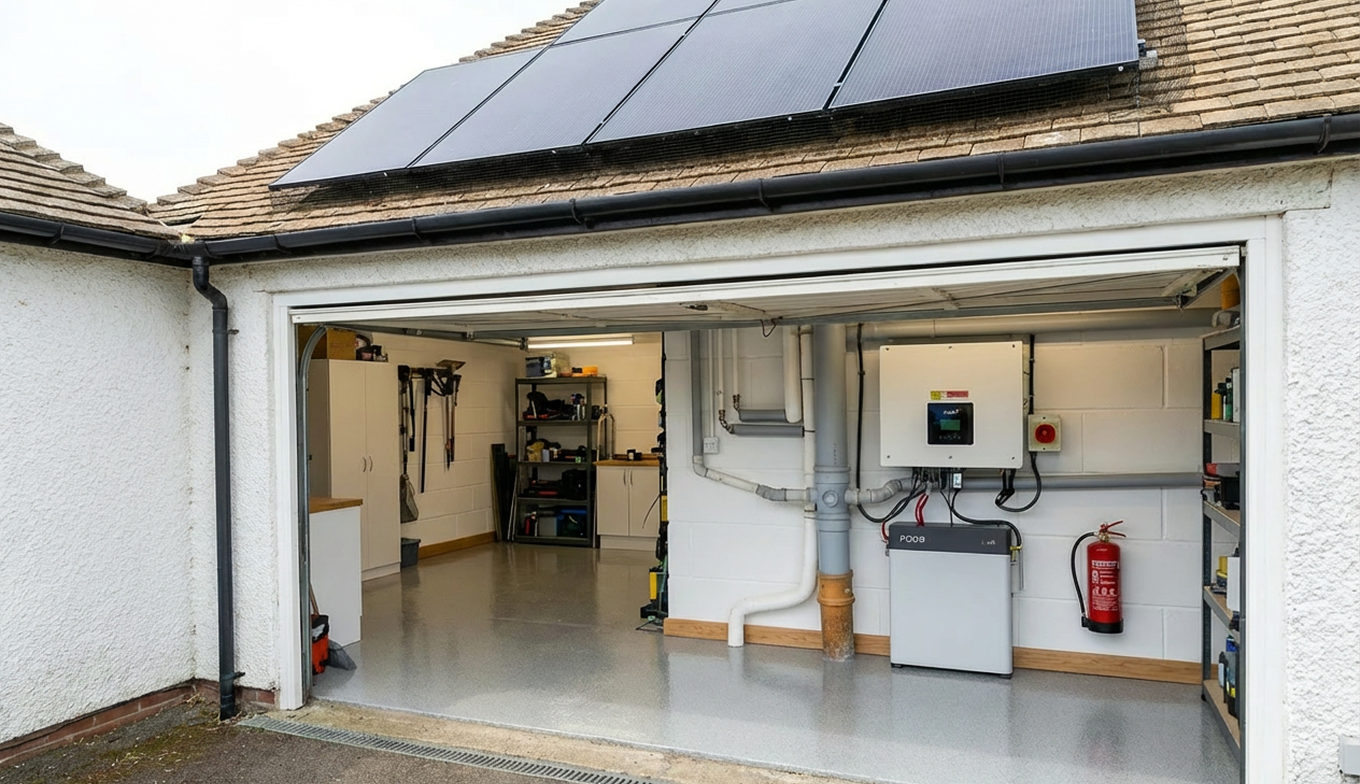
- Installation & space: Batteries need room, proper ventilation, and certified installation.
How Much Does It Cost to Add Battery Storage for Solar Panels?
The cost of adding battery storage to your solar panels can vary depending on several factors:
-
Size of your solar array: Larger systems often need larger batteries.
-
Battery type and capacity: Different battery technologies have different performance and cost profiles.
-
Installation and location: Fees can vary depending on your region and installer.
-
Retrofitting vs. new installation: Adding a battery to an existing system can involve additional equipment and adjustments.
-
Incentives and schemes: Group-buying programs and government incentives can reduce upfront costs.
Because every home and system is different, the most reliable way to understand your options is to get a tailored quote. Explore typical pricing ranges and learn more here.
Are solar panels and battery storage worth the investment?
For many UK homeowners, combining solar panels with a battery can be a smart step toward a greener, more efficient home. While the overall cost varies by household, the value goes beyond financial savings—there are multiple benefits to consider.
Let’s explore what you could gain from adding a solar and battery system.
Financial incentives for solar panels with batteries
A battery is an investment upfront, but it helps you get the most from the energy your solar panels generate. By storing surplus power for later use, you can reduce reliance on the grid and potentially save more over time.
UK households with solar and battery storage often see significant reductions in energy bills. To understand the potential savings and long-term return, check out our guide on battery storage benefits and our detailed ROI overview for battery systems.
Non-financial incentives
Batteries also bring peace of mind and environmental benefits:
-
Greater energy independence, resilience, and security
-
A sustainable choice that guarantees clean power for your home
-
Reduced demand on the grid, supporting energy security
-
Future-proofing against low-carbon regulations
When a large portion of your solar energy is generated during the day and consumed in the evening, a battery can help you make the most of it.
Even if your household uses most energy during the day, or export payments are high, it’s worth evaluating your patterns to see how a battery could fit into your home setup.
Conclusion
Installing solar panels with battery storage is one of the most empowering steps UK homeowners can take to lower energy bills, cut carbon emissions, and gain greater control over their electricity use. With thoughtful planning, it can make your home more sustainable and resilient — particularly as energy prices become increasingly unpredictable.
However, there’s no “one-size-fits-all” solution. Every home is different, so it’s important to assess your roof, energy usage, and long-term goals carefully.
Always seek professional advice to understand the potential payback period, and consider maintenance needs before making a decision.
Key things to remember about solar and battery storage:
- You’ll maximise self-consumption and reduce reliance on the grid.
- Ensure your battery size suits your household’s energy patterns.
- Balance upfront costs against lifetime savings and battery lifespan.
If you decide that solar PV and battery storage is right for you, you’ll be investing in a cleaner, more independent energy future for your home.