Energy prices and global events have caused homeowners across the UK to reevaluate their reliance on fossil fuels. More are now looking at ways to generate their own electricity—whether that's a small step or a full home upgrade.
One option getting a lot of attention is plug-and-play solar. But what is it, how does it work, and is it right for your home?
This guide walks you through the basics, helps you compare it with rooftop solar, and shows where each option makes sense.
What Is Plug-and-Play Solar?
Plug-and-play solar (also called plug-in solar, balcony solar, or a mini solar system) is a small solar setup designed to be simple.
Instead of installing panels across your roof, you typically get:
- 1–2 solar panels
- A built-in micro-inverter solar kit
- A cable that connects to a standard socket
In simple terms, it works like an appliance:
- Sunlight hits the panels and generates electricity
- The micro-inverter converts it into usable AC power
- That electricity flows into your home and is used instantly
Important note: Plug-in solar panels can currently be purchased in the UK, but existing regulations do not permit them to be connected directly into household circuits without an electrician. The government has announced plans to change this (see the Legal section below), but for now, professional installation is required.
Where Are Plug-In Solar Panels Used?
Where Are Plug-In Solar Panels Used?
Plug-in solar is designed for flexibility, which can make it appealing if a full rooftop installation isn't possible.
Common setups include:
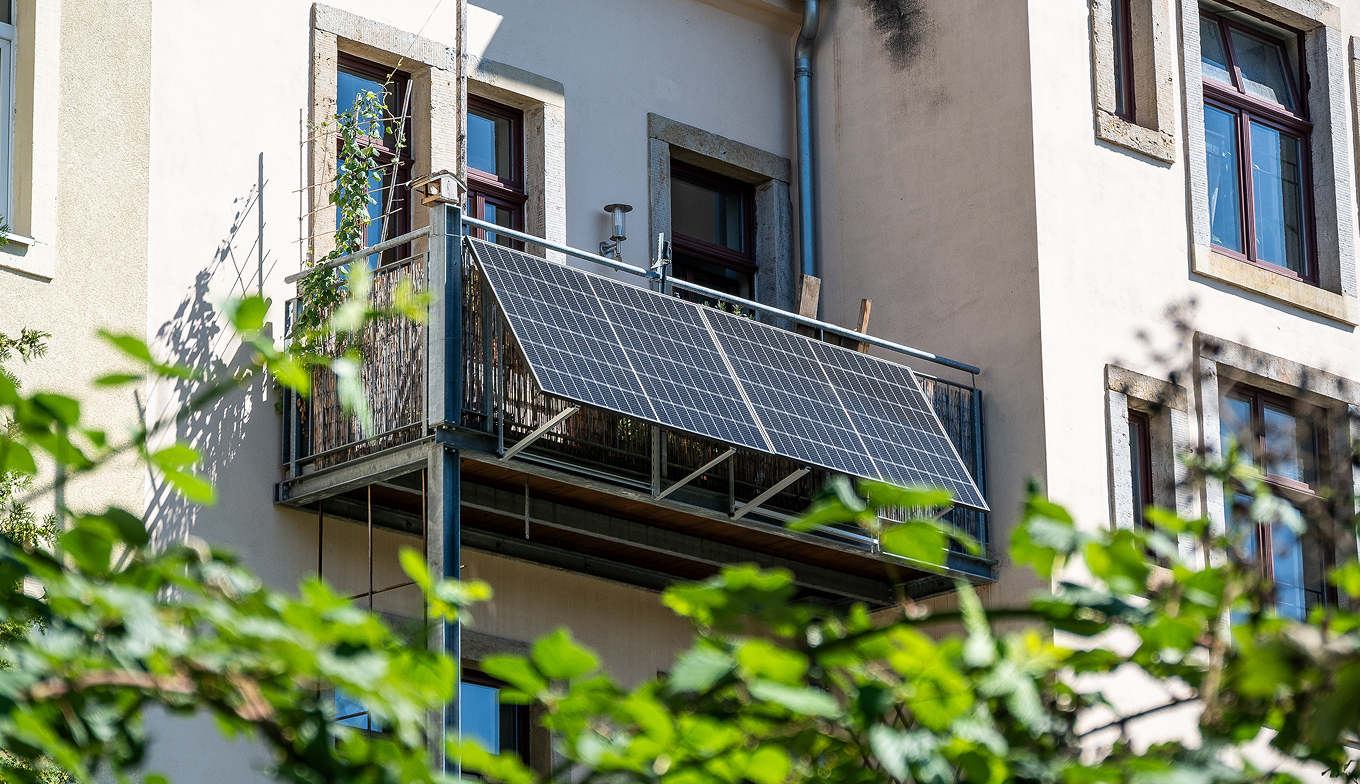
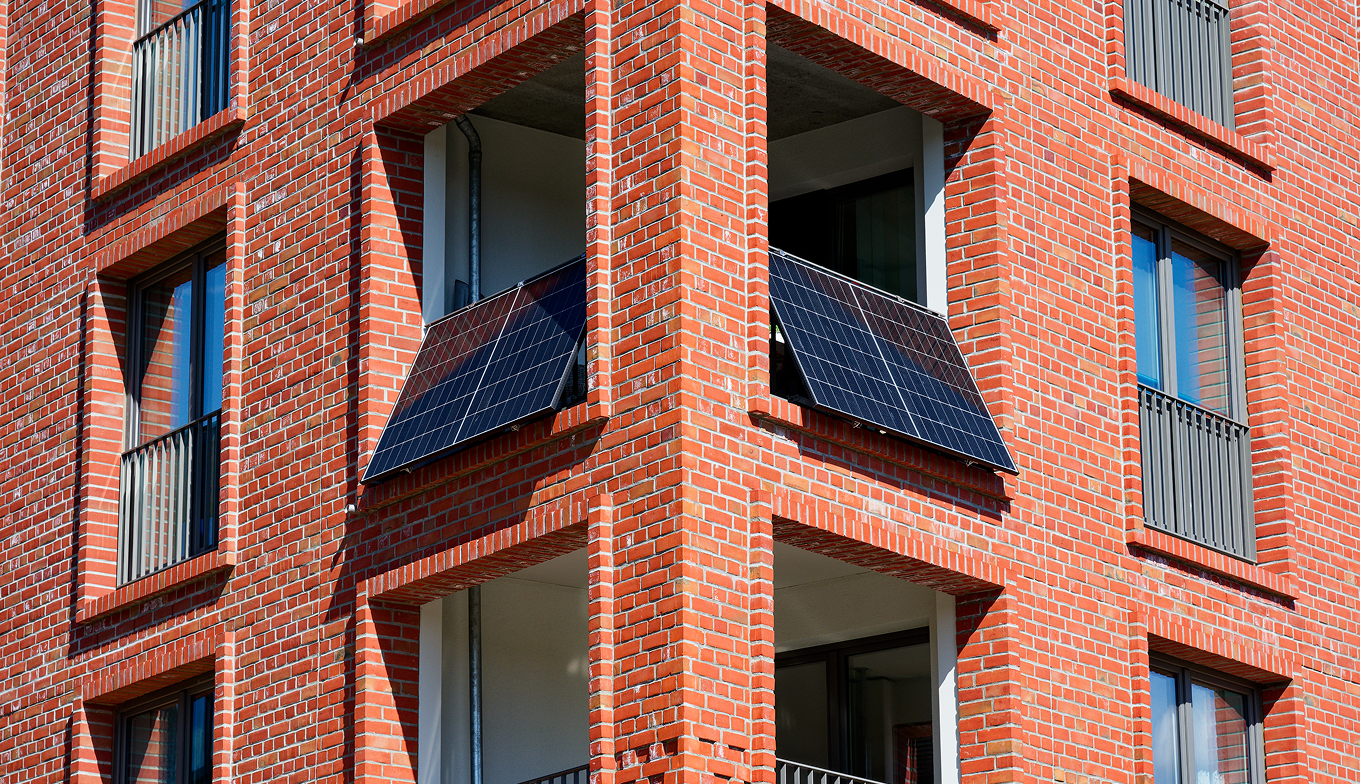
- Balcony solar panels (for UK flats and apartments)
- Small garden or terrace systems
- Wall-mounted panels
- Portable setups for temporary use
This makes it a popular choice for:
- Renters (note: if you're renting, always check with your landlord before fixing panels to a balcony, exterior wall, or any part of the property)
- Flat owners
- Homes without suitable roof space
How Much Energy Do Plug-In Solar Panels Generate?
This is where expectations matter. A typical plug-in solar system:
- Size: 400–800 W
- Annual generation: ~200–500 kWh per year
That's enough to cover around 10–20% of a typical UK home's electricity use (if well positioned).
In practice, it helps power your "always-on" appliances like:
- Fridges
- Wi-Fi routers
- Standby electronics
It can also reduce the cost of running appliances during the day—especially if you shift usage to sunny hours.
How Does That Compare to Rooftop Solar?
If you're weighing your options, this is the most important comparison.
Plug-in solar vs rooftop PV:
Key takeaway:
A typical rooftop system generates around 6–8 times more electricity than a plug-in kit. So while a solar panel kit can make a noticeable difference, it’s not a like-for-like alternative to a full system.
It's also worth knowing that ground-mounted solar panels are a third option—useful where roof access is limited but garden space is available, though they require more planning and are typically a professional installation.
Is Plug-In Solar Legal in the UK?
New regulations — the Plugs and Sockets etc. (Safety) Regulations 1994 and Electricity Safety, Quality and Continuity Regulations 2002 (Amendment) Regulations 2026 (SI 2026/848) — come into force on 27 August 2026 and open the door to self-installation for devices that meet the government's new safety specification.
From August 27th 2026, a "plug-in microgenerator" is allowed to connect using a specially approved plug, without an electrician needed for that connection. To qualify, the device must:
- Generate AC electricity
- Have a maximum output of 800 watts
- Plug into a standard wall socket
- Not store energy (no built-in battery)
- Comply with the government's Plug-in Solar Device Interim Product Specification (version 2)
In short: if your device meets this spec, you'll be able to plug it in yourself — no electrician required just for that step.
Safety rules manufacturers must meet
Every compliant device has to meet strict safety requirements. Here's what they mean for you as a homeowner:
Our View: Where Plug-In Solar Fits
Plug-in solar is a niche but genuinely useful solution—not a mainstream replacement for rooftop solar, but a meaningful option for households currently locked out of rooftop installations altogether.
For renters, flat-dwellers, and those with unsuitable roofs, it represents real access to solar generation that simply wasn't available before. That matters. At the same time, the savings are modest, and the regulatory picture is still catching up with the technology.
When Does Plug-In Solar Make Sense?
You’re likely a good fit if:
- You have a sunny balcony, garden, or wall
- You can’t install rooftop panels
- You want to reduce bills without a high upfront cost
- You’re happy with smaller, gradual savings
When Is Rooftop Solar the Better Option?
If you own your home and have suitable roof space, rooftop solar remains the most effective option.
A full system can:
- Cover most of your electricity use
- Deliver much larger bill savings
- Work with a solar panel and battery kit for even greater independence
- Help protect you from rising energy prices
It’s also where you get the biggest long-term impact—both financially and environmentally.
Plug-In Solar vs DIY Solar Kits
You might also come across DIY solar kits or off-grid systems.
These are different from plug-in solar:
- Many are not grid-connected
- Often used for sheds, vans, or backup power
- Requires more setup and technical knowledge
If you’re considering installing panels yourself, it’s worth reading our guide: DIY Solar Panels: Can You Install Solar Panels Yourself?
A Smarter Way to Think About Solar
You don’t have to choose everything at once. For many households, the journey looks like:
- Start small (learning how solar works)
- Understand your energy use
- Upgrade to a full rooftop system when ready
Plug-in solar can be a useful first step—but for most homeowners, it’s just that: a starting point.
Ready to Take the Next Step?
If you’re exploring solar for your home, the most effective way to reduce bills and gain energy independence is still a professionally installed rooftop system.
Switch Together helps you:
- Access trusted installers
- Get transparent pricing
- Feel confident in your decision
See what a full rooftop system could do for your home—and your bills.
FAQ'S About Plug-in Solar Panels
Do I need an electrician to install plug-in solar?
No, from 27 August 2026 you'll be able to self-install a plug-in solar device that complies with the government's Interim Product Specification and is registered on the G98 Type Test Register, without needing an electrician for the plug-in connection itself. It's still worth having your home's wiring checked if you're at all unsure.
How many plug-in solar panels can I install?
Under the new rules, one compliant plug-in solar device is allowed per household ring final circuit — not one per household. If your home has multiple circuits, you may be able to run more than one device, but you'll need to correctly identify which sockets share a circuit, usually via your consumer unit (fuse box).
Can renters install plug-in solar?
Yes, but you'll always need your landlord's or freeholder's consent before fixing anything to a balcony, exterior wall, or any part of the property — this doesn't change under the new rules.
What is Engineering Recommendation G98, and why does it matter?
G98 is the technical standard that governs how small generators, including plug-in solar, connect safely to the UK's electricity network. Compliant devices must be registered on the industry's G98 Type Test Register, and your Distribution Network Operator (DNO) must be notified before use.
Can I install plug-in solar on any building?
The specification restricts installation on certain surfaces because of fire risk, including aluminium composite cladding, timber cladding, and timber balconies. If you live in a flat, high-rise, HMO, or a listed or thatched building, check with your landlord or an electrician before buying.