Table of Contents
Thinking about going solar and cutting your electricity bills? It’s an exciting step. And a smart one. A question we often hear is: “Can solar panels power my entire home all year round?” The honest answer? Not completely. But that doesn’t mean solar isn’t worth it. Far from it.
Why 100% Solar Is Difficult in the UK
Let’s say the quiet part out loud: the UK isn’t the Mediterranean.
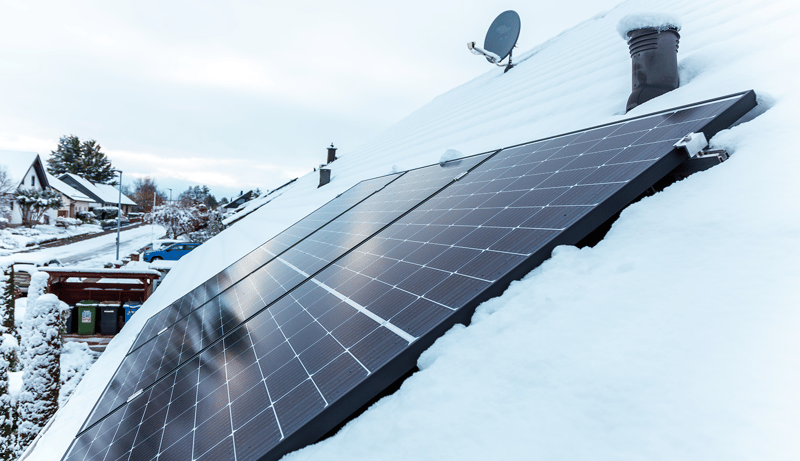
- Winter sunlight is much weaker. In winter, solar generation can be 2–3 times lower than in summer, just as energy use tends to rise.
- Grey spells happen. Several dull days in a row can reduce output, even with a larger system.
- Roof space has limits. Most homes simply don’t have the space for the number of panels needed to cover every kilowatt hour, every day of the year.
Technically, full energy independence is possible. But it usually means installing far more solar panels than most homes need — plus a large battery system to store multiple days’ worth of electricity. For most households, that’s more cost and complexity than makes practical sense.
And here’s the important part: you don’t need to rely 100% on solar to see meaningful benefits.
What Solar Panels Can Do
For most UK homeowners, solar isn’t about going completely off-grid. It’s about taking control of a big chunk of your electricity needs:
A typical 3–4 kWp system can:
- Generate around 50–70% of your annual electricity needs
- Power everyday essentials like lighting, appliances, and home working equipment
- Work alongside a 5–10 kWh battery to store daytime energy for evening use
- Increase self-consumption to 60–80% with smart usage and battery support
That’s a significant reduction in grid reliance — and in bills. Rather than replacing the grid entirely, solar works alongside it. For many households, it’s one of the most practical, empowering steps you can take towards a more cost-efficient home.
In summer, you may produce more than you use. In winter, you’ll draw more from the grid. Over the year, it balances out — reducing your overall costs and emissions in a steady, reliable way.
How Much Can Solar Panels Cover?
For a typical UK household using around 4,000 kWh per year, a 3 kWp system can generate roughly 2,600–2,700 kWh per year. That’s a substantial share of your annual usage — and a strong step toward lower bills and cleaner energy.
Here’s how that plays out across everyday appliances:
- Fridge / Freezer (300–500 kWh/year)
Around 11–19% of your system’s annual output. Because it runs all day, some energy comes from solar, some from the grid — especially overnight. - Lighting (200–400 kWh/year)
Around 7–15%. Daytime lighting benefits most, particularly in winter. - Washing Machine (150–250 kWh/year)
Around 6–9%. Run it during daylight hours and you’ll use more of your own solar power. - Dishwasher (120–200 kWh/year)
Around 4–7%. Smart scheduling helps maximise solar use. - Oven / Hob (400–700 kWh/year)
Around 15–27%. Solar can meaningfully support cooking during brighter months. - Heat Pump (2,500–4,000 kWh/year)
A 3 kWp system could generate energy equivalent to 93–154% of this annual demand — though winter heating needs are higher when solar output is lower. - EV Charging (1,500–2,000 kWh/year)
Around 56–77%. Charging during the day dramatically increases how much solar you use directly. - Miscellaneous appliances (500–1,000 kWh/year)
Around 19–38%. TVs, laptops, kettles and more can all tap into solar generation during the day.
So what’s the catch?
Without a battery, most homes use around 37–45% of the solar electricity they generate directly. In practical terms, that means roughly a quarter of your total annual electricity demand could be covered straight from your roof.
The rest? It’s exported to the grid during the day and drawn back in when you need it — like in the evening or during darker winter months.
So, solar alone might not make your home fully independent. But it will:
- Reduce your reliance on the grid
- Lower your electricity bills
- Protect you from rising energy prices
- Cut your home’s carbon footprint
- Increase your energy resilience
And with smart usage habits — or a battery — you can increase how much of your own clean energy you use.
How Batteries Help
Adding a solar battery changes the game:
| Battery Size | PV System | What You Can Expect |
|---|---|---|
| None | ~3 kWp | Self-sufficiency: ~24%, self-consumption: 37–45% |
| 5–10 kWh (0.5–1 day load) | 3–4 kWp | Self-sufficiency: 50–70%, self-consumption: 60–80% |
| 10–15 kWh (1–1.5 days load) | 1.2–1.5 × annual demand | Self-sufficiency: 70–80%, diminishing returns beyond this |
| Multi-day storage | 2–3 × annual demand | Technically close to 100%, but prohibitively expensive |
Even with a battery, your home would stay connected to the grid to cover extended cloudy days or winter lulls.
The Smart Approach for Homeowners
Here’s what this means for you:
- Solar panels significantly reduce your bills and environmental footprint.
- Pairing panels with a battery can give you independence for day-to-day use.
- Going fully off-grid in the UK is expensive and usually unnecessary. The grid is your safety net.
- Combining solar with other energy-smart upgrades—like heat pumps, smart thermostats, or energy-efficient appliances—maximises benefits without overspending.
Bottom Line
Solar panels can power a large share of your home’s electricity, but they rarely cover everything year-round on their own. The sweet spot for UK homes is 50–70% self-sufficiency, using solar plus battery.
At Switch Together, we help homeowners take that step confidently. From choosing the right panels and battery to making the most of every sunny day, we guide you every step of the way—so your home, bills, and community all benefit.
Ready to see what solar could do for your home? Join thousands of UK households already powering their homes with solar and smart batteries. Start your greener journey today and discover the upgrades that save energy and money.