Table of Contents
If you’ve been looking into solar, you’ve probably come across in-roof solar panels (also called integrated solar panels) and wondered how they actually work—and whether they’re right for your home.
This guide walks you through it clearly, so you can decide with confidence.
What are in-roof solar panels?
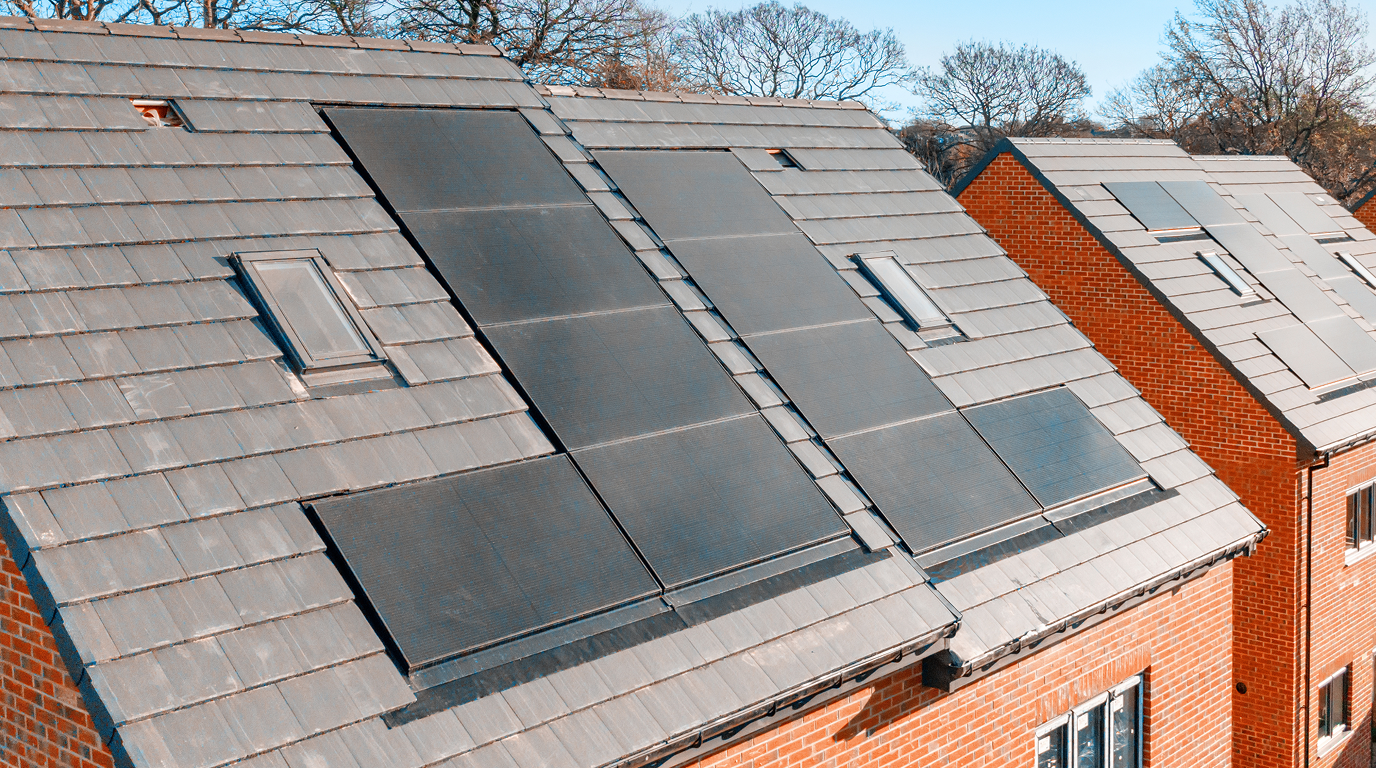
In-roof solar panels are designed to sit within your roof, rather than on top of it.
That means they replace part of your roof covering, instead of being mounted above your tiles. In UK standards, these are called roof-integrated systems—they become part of the roof itself, alongside things like tiles or slates.
You might also see them referred to as:
- in-roof solar PV panels
- integrated solar panels
- solar panels integrated into the roof
The idea is simple: they generate electricity while blending into your roofline more neatly.
How are they different from standard solar panels?
The biggest difference is how they’re installed—and what role they play in your roof.
- In-roof solar panels sit flush and replace tiles
- Standard (on-roof) panels are mounted above your existing roof
That design choice affects a few things:
- Appearance
In-roof panels are more discreet and sit flat with your roof - Installation
They’re more complex to install because they become part of the roof structure - Airflow and performance
Standard panels have airflow underneath them, which helps keep them cooler
In-roof systems run slightly warmer, which can mean a small drop in performance (typically a few percent across the year)
In practice, the performance gap is usually modest—especially in the UK’s cooler climate.
Do integrated solar panels cause leaks in your roof?
This is one of the most common concerns.
The short answer: they shouldn’t—when installed properly.
For in-roof solar panels, weatherproofing is built into the system itself. UK standards require that:
- the system maintains the roof’s watertightness
- it’s tested for wind, rain, and fire performance
- it doesn’t rely on temporary sealants alone
That’s why choosing a certified system and experienced installer matters. With the right setup, your roof should remain just as weatherproof as before.
Do they drill holes in your roof?
With any solar installation, there is some level of fixing into the roof structure.
For in-roof systems:
- sections of tiles are removed
- the integrated system is fitted in their place
- fixings are made into the roof structure beneath
It’s a planned part of the installation—not an afterthought—and is designed to meet structural and weatherproofing standards.
How to install in-roof solar panels
This isn’t a DIY job, but it helps to understand the steps involved.
A typical process looks like:
- Roof assessment
Checking structure, condition, and suitability - System design
Matching the panels and integration system to your roof type - Tile removal
The section of roof is opened where panels will sit - Installation of the in-roof solar panel kit
The integrated system is fitted and sealed into the roof - Electrical connection and testing
Making sure everything works safely and efficiently
In the UK, it’s best to:
- use an MCS-certified installer
- choose a system designed for your roof type
- check planning rules if you’re in a conservation area or listed building
When do in-roof solar panels make the most sense?
They’re not for every home—but in the right situation, they fit naturally.
They tend to work best if you are:
- Building a new home
Easier to design everything together from the start - Replacing your roof anyway
You’re already removing tiles, so integration is more straightforward - Looking for a more discreet look
Especially in areas where appearance matters
They can also suit homes with:
- simple roof shapes
- good, unshaded roof space
When might standard panels be the better fit?
Sometimes, keeping things simple works in your favour.
Standard on-roof panels may be more suitable if:
- your roof is in good condition and doesn’t need replacing
- you want a simpler, more cost-effective installation
- you’re prioritising maximum performance over appearance
A quick way to think about it
If you’re already doing roof work, or care about a flush, built-in look, in-roof solar panels are worth exploring.
If you’re retrofitting onto an existing roof and want the simplest route, standard panels often make more sense.
Final thought
Most people don’t need to decide this alone.
A good installer will look at your roof, your plans, and your priorities—and help you weigh up both options clearly.
And that’s usually the point where it all starts to feel much simpler.