Table of Contents
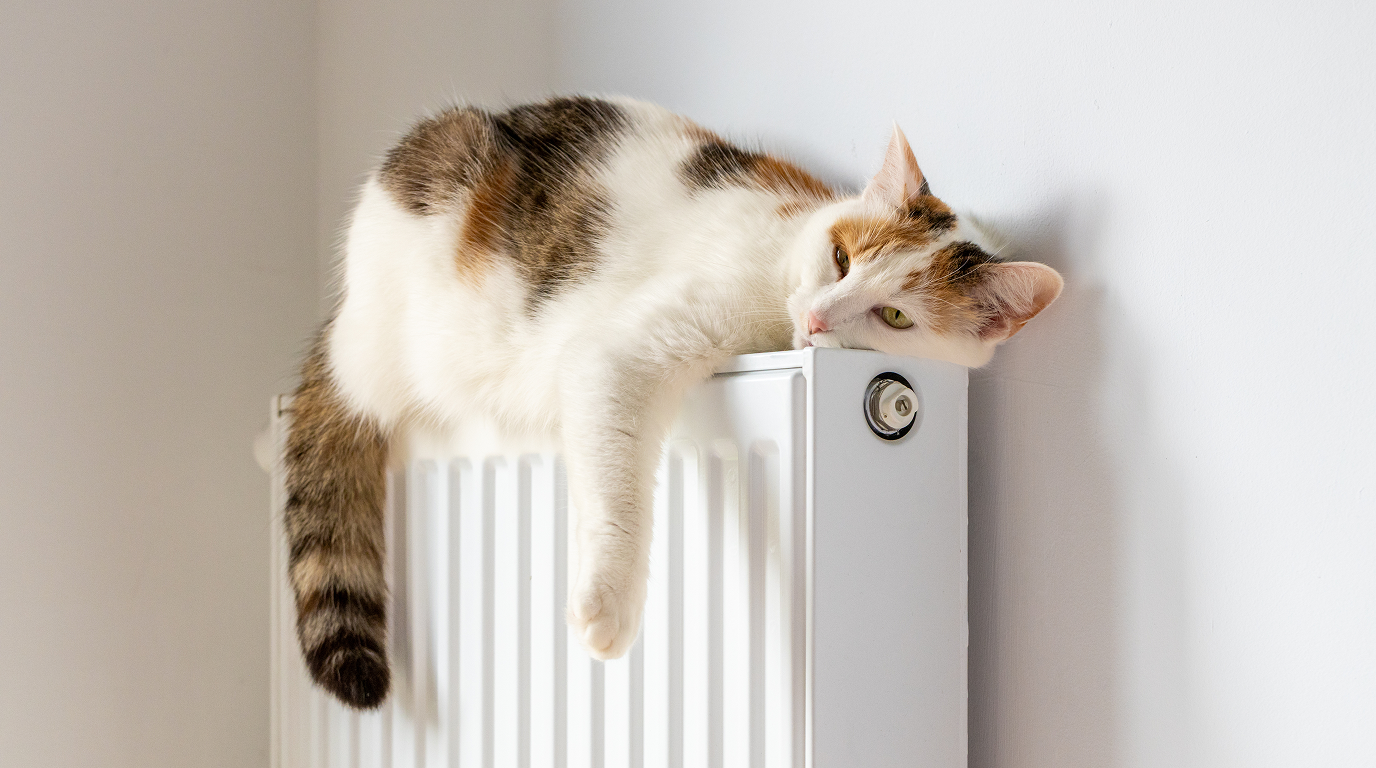
If you've ever left the heating on a little longer, or the radio playing, just so your dog or cat isn't sitting in a cold, quiet house — you're not alone. You're doing what most pet owners do.
Companion Life found that 53% of dog owners and 47% of cat owners leave the heating on specifically so their pet isn't cold while they're out — and 35% say they're actively conscious of their pet's comfort when they're away from home. A further 22% say they'd be willing to spend more on energy just to keep their pet comfortable.
Depending on the pet, the habit, and the devices involved, UK pet owners are spending anywhere from £2 to well over £1000 a year keeping their pets warm and comfortable.
Nationally, our modelling suggests pet-related cooling costs UK households somewhere between roughly £14 million and £138 million a year across the country's pet-owning and aquarium-owning households.
Here's where that money actually goes, and a few ways to bring it back down without making your pet, or your conscience, suffer for it.
Is Your Pet Quietly Adding £1,000 to Your Energy Bill?
What it actually costs, by pet and by habit
We modelled this using the current Ofgem price cap — 26.11p/kWh for electricity and 7.33p/kWh for gas (Oct–Dec 2026) — applied to real appliance wattages and typical usage hours.
| Setup | Annual cost | What's running |
|---|---|---|
| Self-warming pet bed only | £0–£2.37 | Passive reflective pad — no electricity at all |
| Small heated pet bed (indoor) | £13.72 | 6W thermostatic bed, cycling overnight |
| Large heated pet bed (outdoor) | £91.49 | 40W bed, running continuously |
| Nano aquarium (10 gal) | £49.56 | 25W heater, 5W filter, 10W LED |
| Medium aquarium (55 gal) | £291.62 | 200W heater, canister filter, LED bar |
| Large reef tank (125 gal) | £621.37 | 300W heater, return pump, lighting, skimmer |
| Small garden pond | £210.43 | UV filter, water pump, air pump, all day |
| Koi pond | £825.95 | Filter pump, air pump, UV clarifier |
| Leopard gecko | £102.93 | Heat mat + thermostat, 24 hours |
| Bearded dragon | £268.75 | Basking bulb, UVB tube, ceramic heater |
| Electric fan heater for a pet room | £501.31 | 2kW heater, 8 hrs/night over winter |
| Dog — typical pampering | ~£26 | Heated bed + TV, radio, pet cam |
| Dog — full heating + media | £1,124.01 | Central heating + fan heater + bed + media |
| Cat — typical pampering | ~£30 | Heating pad + bed + radio + pet cam |
| Cat — full heating + media | £635.08 | Central heating + pad + bed + media |
What stands out isn't any single number — it's the spread. The same instinct (keeping an animal warm and settled) can cost next to nothing or well over a thousand pounds a year, depending entirely on which devices are doing the work.
How much does it cost to keep the heating on for a pet?
Heating an entire home for a pet that would often settle just as happily into a warm bed is one of the more expensive ways to solve a very reasonable problem. Nationally, Companion Life's survey put the collective extra spend at £584.7 million for cat owners and £514.7 million for dog owners; an earlier Energy Saving Trust study, from 2016, estimated it at £78 million before recent price rises.
Fish, ponds, and reptiles
Dogs and cats get most of the attention, but tank and vivarium heating often costs more, simply because the equipment runs around the clock rather than just when you're home. A well-stocked medium aquarium (£291.62/year) or a koi pond (£825.95/year) can quietly outstrip anything a dog or cat needs — heater, filter and lighting all drawing power, every hour of every day, regardless of the weather outside.
Reptiles sit in a similar place. A leopard gecko's heat mat runs to about £102.93 a year; a bearded dragon's full basking-and-UVB setup, closer to £269. None of this is a reason to worry — these are just the honest running costs of keeping an animal comfortable — but it's useful context if a bill has crept up and the obvious suspects (the boiler, the tumble dryer) don't fully explain it.
Cost estimates are Switch Together's own modelling, based on the Ofgem price cap for Oct–Dec 2026 (26.11p/kWh electricity, 7.33p/kWh gas) applied to typical device wattages and usage patterns. Actual costs will vary by home, tariff, and how devices are used.
And it's not just winter: keeping pets cool costs too
Heat isn't the only thing pet owners worry about. During the UK's increasingly common heatwaves, the same instinct kicks in — just pointed the other way. The good news, according to our modelling, is that cooling is a much smaller line item than heating, for one simple reason: there are far fewer heatwave nights in a year than cold ones.
| Setup | Annual cost | What's running |
|---|---|---|
| Pet cooling mat (passive) | £0 | Self-cooling gel pad, no electricity — and searches for these jumped over 5,000% during the June–July 2026 heatwave |
| Pedestal fan for a pet room | £8.32 | 60W fan, running overnight across 59 heatwave nights |
| Aquarium chiller | £28.57 | Keeps tank temperature stable through summer at a 40% duty cycle |
| Portable air conditioning unit | £138.64 | 1000W unit, same overnight pattern as the fan |
Even at the top end, a summer of portable air conditioning (£138.64) costs a fraction of a winter's central heating (£596.58) or a fan heater (£501.31).
The cheapest fix is often the easiest one
The most reassuring thing in the data is how little the low end costs, in every season. A self-warming bed — no electricity, just reflective insulation — runs to £0–£2.37 a year and, paired with a radio or pet cam for company, still comes in under £3. A cooling mat does the same job in summer, for the same £0. Compare either to the £500+ a fan heater adds in winter, or the £138 a portable AC unit adds in summer, and the gap isn't subtle.
A few other low-cost swaps worth trying:
- Move the bed, not the thermostat. A bed pushed against an external wall or under a draughty window needs far more heat to feel warm in winter — and a spot in direct summer sun needs far more cooling. Moving it a few feet, or adding a blanket layer (or shade), often solves the problem on its own.
- Let the house hold its temperature. Closing curtains at dusk in winter — or during the hottest part of the day in summer — helps the whole home stay at a steady temperature, pets included, without appliances working harder for it.
- Check the room, not just the pet. If a specific room always feels too cold or too warm enough that the heating or a fan goes on "for the animal," it's often a sign the room itself is losing or gaining heat fast, which usually has a cheaper fix than running an appliance longer.
For a fuller, room-by-room version of this, our guide on how to make your home more energy efficient is worth a read.
Putting it in perspective
The average UK home uses around 3,323 kWh of electricity a year, according to government data. Our modelling shows leaving full heating, fan heater, bed and media combined adds around 4,257 kWh on top of that, which is genuinely more than most households use in a year for everything else combined.
If it's the whole house that needs looking at
Sometimes the pet is just the reason the problem became visible — the house itself is what's expensive to keep warm. A couple of things worth knowing:
A heat pump (a system that draws heat from the outside air rather than burning gas) tends to run efficiently over long, steady periods — which suits a household that likes to keep the house at a consistent, pet-friendly temperature rather than switching the heating on and off. Our guide on whether heat pumps work in cold weather covers how they perform through a UK winter, and our heat pumps page has details on current grants of £7,500 or £9,000.
If it's specifically the electricity side that's adding up, solar panels and battery storage let you generate and store your own power, so some of that always-on kit runs on energy you've already paid for once.
And if your tariff itself hasn't been looked at in a while, that's usually the fastest place to start. Our collective energy switch groups households together to access more competitive rates than most people can find negotiating alone — no pressure, no obligation, just a fairer number underneath everything else on this list.
Nobody needs to feel bad about keeping a pet warm — it's one of the more understandable reasons a bill creeps up. But if the number's higher than expected, there's usually a cheaper way to get the same result. Explore your options with Switch Together to see what a warmer, fairer-priced home could look like.