Table of Contents
If you heat your home with oil, you already know the feeling. The tank gets low, you check prices, you top up anyway because it's cold — and you quietly wonder how much longer this can go on.
You're not imagining it. Oil central heating leaves you exposed to global price shocks, rising carbon costs, and a tank that always seems to empty faster than it should. Across the UK, more and more homeowners are asking the same question: is it time to switch to a heat pump?
In 2026, the answer got more interesting. The government has just increased the Boiler Upgrade Scheme grant to £9,000 for homes on oil or LPG — £1,500 more than the grant for gas homes. That changes the numbers significantly. In this guide, we'll walk through heat pump vs oil boiler across upfront cost, running cost, efficiency, carbon, suitability and more, so you can work out what's right for your home.
Key differences at a glance
Before we get into the numbers, here's how the two systems stack up.
| Feature | Oil Boiler | Air Source Heat Pump |
|---|---|---|
| Powered by | Heating oil (kerosene) delivered to a tank | Electricity |
| How it works | Burns oil to heat water | Extracts heat from outside air and transfers it indoors |
| Efficiency | 85%–93% (new condensing models) | 280%–400% (COP 2.8–4.0) |
| Typical lifespan | 10–15 years | 20+ years |
| Hot water | On demand or stored in a cylinder | Heated and stored in a cylinder |
| Requires an oil tank? | Yes (needs siting, bunded tank, deliveries) | No |
| Upfront cost (after grant) | £3,000–£5,500 replacement | From around £5,500 after £9,000 BUS grant |
| CO₂ emissions | High (roughly 2.5–3.5 tonnes/year) | Low and falling as the grid decarbonises |
| UK grant available | None | £9,000 Boiler Upgrade Scheme (oil/LPG homes, England & Wales) |
Upfront costs: what you actually pay in 2026
This is where oil boilers have traditionally won. A like-for-like oil boiler replacement is cheaper than a heat pump — on paper.
But the 2026 numbers tell a very different story for oil homes, thanks to a targeted increase in the Boiler Upgrade Scheme.
The Boiler Upgrade Scheme, updated for oil
In April 2026, the UK government raised the BUS grant to £9,000 specifically for homes replacing an oil or LPG boiler with a heat pump in England and Wales. The grant for homes on mains gas remains £7,500. The higher amount reflects what oil customers already know: rural and off-gas homes are more exposed to price shocks.
The grant is applied by your installer at the point of sale, so you don't pay the full amount and wait to claim it back.
Upfront cost comparison
| Oil Boiler (like-for-like replacement) | Air Source Heat Pump | |
|---|---|---|
| Typical upfront cost | £3,000–£5,500 | ~£14,500 (typical installed cost) |
| Grants available | None | £9,000 Boiler Upgrade Scheme (oil/LPG) |
| After grant | £3,000–£5,500 | ~£5,500 (on average) |
With the £9,000 grant — and on top of that, the group-buying discount available through Switch Together — a heat pump can come out around the same price as replacing an old oil boiler, and sometimes cheaper. That's a meaningful shift, and it's new in 2026.
Register for a heat pump personal offer →
Running costs: heat pump vs oil boiler
Upfront cost is only half the picture. Oil has always been a volatile fuel — the price you pay per litre depends on crude markets, shipping costs and supplier margin — and it's the running cost that makes most homeowners eventually look elsewhere.
How oil heating costs work
An oil boiler's running cost depends on three things: the price per litre, how efficient your boiler is, and how much oil your home uses. A typical three or four-bedroom UK home on oil heating uses somewhere between 1,500 and 2,500 litres a year. At today's price per litre for domestic kerosene, which has ranged widely across 2025–26 — that's a wide spread of annual spend, but usually between £1,000 and £1,800 a year on fuel alone before any servicing costs.
Oil prices can spike sharply without warning. The most recent jumps during global supply disruptions pushed the average UK household's oil bill well above this range for months at a time.
How heat pumps compare
A heat pump doesn't burn fuel — it moves heat. For every 1 kWh of electricity it uses, a well-installed air source heat pump delivers 2.8 to 4.0 kWh of heat. That efficiency is measured as a COP — Coefficient of Performance. A COP of 3.0 simply means you get 3 units of heat for every 1 unit of electricity you pay for. The higher the COP, the more heat you're getting for your money. That's the reason the maths works even though electricity is more expensive per kWh than oil.
Concrete numbers for a typical UK home:
| Oil Boiler | Air Source Heat Pump | |
|---|---|---|
| Typical annual fuel bill | £1,000–£1,800 | £800–£1,100* |
| Annual maintenance | ~£120 (service) | ~£200 |
| Typical lifespan | 10–15 years | 20+ years |
*Lower when combined with a dedicated heat pump electricity tariff, and/or with solar panels. See our guide to solar panels and heat pumps.
Over a 15-year horizon — the life of a new oil boiler — the running cost difference typically adds up to several thousand pounds in favour of the heat pump, before factoring in the rising carbon cost priced into fossil fuels. Heat pump servicing is typically slightly higher annually, but systems usually last significantly longer and avoid oil tank maintenance, deliveries, and associated risks.
Real-world example: a typical oil-heated home
To make this concrete, here's how the numbers look for a home that's pretty representative of oil-heated households across the UK.
| Home | 3-bed detached rural property |
| Current EPC rating | D |
| Annual oil spend | ~£1,400/year |
| BUS grant applied | £9,000 |
| Upfront cost after grant | ~£5,500 |
| Expected heat pump running cost | ~£900–£1,000/year |
| Annual saving | ~£400–£500 |
| Indicative payback period | 11–14 years* |
*Payback shortens with rising oil prices, a heat pump electricity tariff, or solar panels — all common combinations for rural homes.
Every home is different, so your actual figures will vary. An installer survey will give you a personalised picture — and with Switch Together, that survey is free and no obligation.
Efficiency: why heat pumps win on the physics
Oil boilers have got much better. A new A-rated condensing oil boiler is around 90% efficient — that is, 90p of every £1 you spend on oil becomes useful heat.
A heat pump doesn't work by burning fuel at all. It moves heat from outside air into your home, so its "efficiency" can be above 100% — in practice, 280–400%.
| Oil Boiler | Heat Pump | |
|---|---|---|
| Typical efficiency | 85%–93% | 280%–400% (COP 2.8–4.0) |
| Flow temperature | 65°C–75°C | 35°C–55°C (works best at lower temps) |
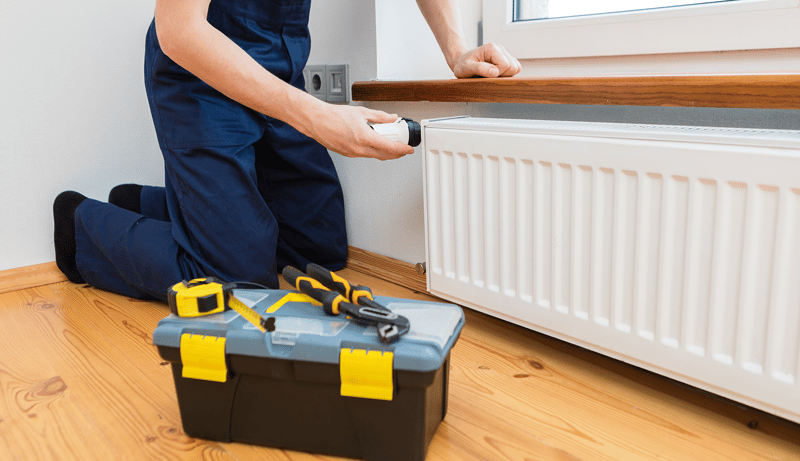
That lower flow temperature matters. Heat pumps are designed to run continuously at gentler temperatures, which means a well-insulated home stays at a stable, comfortable warmth instead of cycling between hot radiators and cool rooms. In older, poorly insulated oil-heated homes, you may need to upgrade one or two radiators when switching — your installer will design this in.
Is your home suitable for a heat pump?
This is the biggest question oil homeowners have, and the honest answer is: the vast majority of homes with oil central heating are excellent candidates.
Here's why. Oil heating tends to go with:
- Rural, detached and semi-detached homes with outdoor space for the heat pump unit
- Existing hot water cylinders (because oil systems usually have one already — one less thing to add)
- Properties that are already off the gas grid, which makes electric-based heat pumps the natural future path
- Good wall and loft insulation in most cases (many rural homes have been insulated under previous schemes)
Do heat pumps work in cold weather? Yes — air source heat pumps work down to around -15°C to -20°C, well below typical UK winters. We cover this in more detail in our Do Heat Pumps Work in Cold Weather? guide.
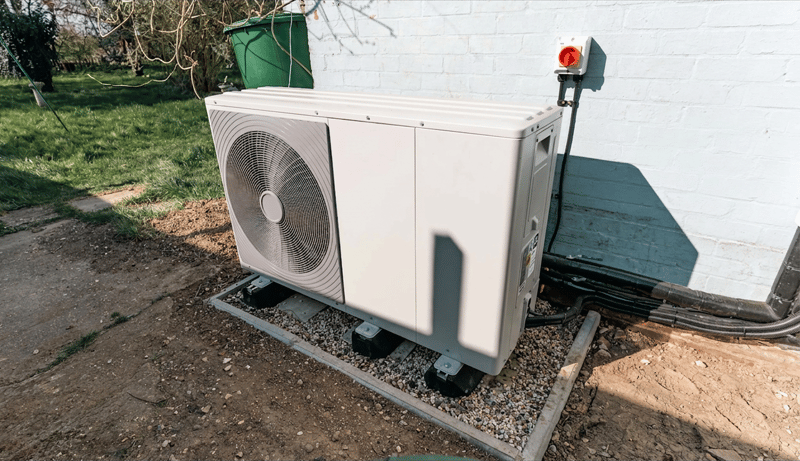
You may need to: upgrade one or two radiators to slightly larger ones, add loft insulation if yours is thin, and find space outside for the unit (about the size of a washing machine, a metre or so from the wall).
Carbon emissions
If reducing your home's carbon footprint matters to you, this comparison isn't close.
A typical oil-heated home produces around 2.5–3.5 tonnes of CO₂ per year from heating. That's a bigger carbon footprint than the same home on gas, because oil is more carbon-intensive per unit of heat.
A heat pump, running on the UK electricity grid, produces roughly a third of that today — and the gap widens every year as the grid decarbonises. According to Carbon Brief, switching from a fossil fuel boiler to a heat pump cuts home heating emissions by up to 80%.
| Oil Boiler | Heat Pump | |
|---|---|---|
| CO₂ emissions | High (2.5–3.5 tonnes/year) | Low — and falling as the grid decarbonises |
For many oil homes, switching to a heat pump is the single biggest thing you can do to lower your household carbon footprint.
What about a hybrid heat pump + oil boiler?
A hybrid system keeps your oil boiler and adds a smaller heat pump that does the heavy lifting most of the year. In theory, the boiler only kicks in during the coldest days or for quick hot water.
In practice, hybrid systems are a compromise. You still pay for oil deliveries, still maintain a tank, still emit carbon — and the £9,000 Boiler Upgrade Scheme grant is designed around full replacement, not hybrid installation. For most oil homeowners, it's simpler, cheaper in the long run, and cleaner to go fully electric.
There are edge cases (very large homes, listed properties with installation constraints) where a hybrid is the right answer. If that's you, your installer will tell you.
Can a heat pump replace my oil boiler? (The short answer)
Yes. A modern air source heat pump can fully replace an oil boiler for both heating and hot water — you won't need the boiler, the oil tank or the oil deliveries.
Because most oil-heated homes already have a hot water cylinder, the switch is usually more straightforward than a gas-to-heat-pump conversion. An MCS-certified installer will survey the home, size the unit for your heat demand, check radiator sizes, and handle the BUS grant paperwork on your behalf.
When the oil boiler is removed, the tank can be decommissioned or kept for garden use. Switching frees up the space entirely if you'd rather.
A quick note for Northern Ireland
The £9,000 Boiler Upgrade Scheme covers England and Wales only. Northern Ireland has its own schemes — NISEP (income-dependent), and the recently announced Warm Homes Plan, which is expected to include dedicated heat pump support for NI households in 2026.
The running costs and efficiency case for switching from oil to a heat pump is the same in NI as in the rest of the UK, and NI has one of the highest concentrations of oil heating in Europe, so the opportunity is especially big.
Frequently asked questions
Are heat pumps cheaper than oil?
On running costs, yes — for most UK homes, a well-installed air source heat pump costs less per year to run than an oil boiler once efficiency is taken into account. In 2026, the maths got stronger: the Boiler Upgrade Scheme offers £9,000 toward a heat pump for oil homes, which closes much of the upfront cost gap.
Can I replace my oil boiler with a heat pump?
Yes. A modern air source heat pump can fully replace an oil boiler for both space heating and hot water. Most oil-heated homes already have a hot water cylinder, which makes the switch more straightforward than you might expect.
How much does it cost to switch from oil to a heat pump in 2026?
After the £9,000 Boiler Upgrade Scheme grant, a typical installed heat pump costs around £5,500 on average.
Do heat pumps work well in rural or cold homes?
Yes. Air source heat pumps operate down to around -15°C to -20°C — well below typical UK winter temperatures. Rural, off-gas homes tend to be strong candidates because they usually have outdoor space and an existing hot water cylinder.
What happens to my oil tank if I switch?
When the oil boiler is decommissioned, the tank is no longer needed and can be removed, sold or repurposed. You stop paying for oil deliveries, tank maintenance and tank insurance from day one.
Final thoughts: Is it time to switch?
On oil, the decision used to come down to "cheaper boiler now vs. cheaper running costs later". In 2026, with a £9,000 grant targeted specifically at oil homes and group-buying schemes that stack on top, that trade-off has tilted.
Switching to a heat pump is likely the right call if:
- You're thinking long-term — staying in the home at least 5+ years
- You want to insulate yourself from oil price shocks
- You want to cut your carbon footprint significantly
- You want to take advantage of the £9,000 oil-home grant while it lasts
Sticking with oil might make sense if:
- Your current boiler has years of life left, and you're moving soon
- You live in a property with very limited space for an outdoor unit
- You have specific installation constraints (listed building, access issues) that a hybrid would solve better
If you're not sure yet, the next step is to register for a no-obligation quote from a vetted installer, like Switch Together. Switch Together's group-buying scheme means households save together — and the £9,000 grant is factored in upfront.
Register for your free personal offer →