Table of Contents
One of the biggest attractions of solar panels is the feeling of independence they bring. Generating your own electricity on your own roof can make you feel less exposed to rising energy prices, supplier changes, and uncertainty in the wider energy system. For many homeowners, that naturally leads to an important question:
If the power goes out, will my solar panels keep working?
It seems like they should. After all, if your panels are producing electricity, surely that power could still be used in your home — especially during daylight hours. The reality, however, is a little more complex.
For most UK homes, solar panels do not work during a power cut. That often comes as a surprise, and it can feel disappointing at first. However, this behaviour is not a flaw in solar technology. It exists for very good safety reasons, and there are ways to design a system that can still provide power during an outage.
This guide explains what really happens when the grid goes down, why solar systems shut off, how batteries and backup power work, and what homeowners can realistically expect from modern solar technology.
Will my solar panels work in a power cut?
In most cases, the answer is no.
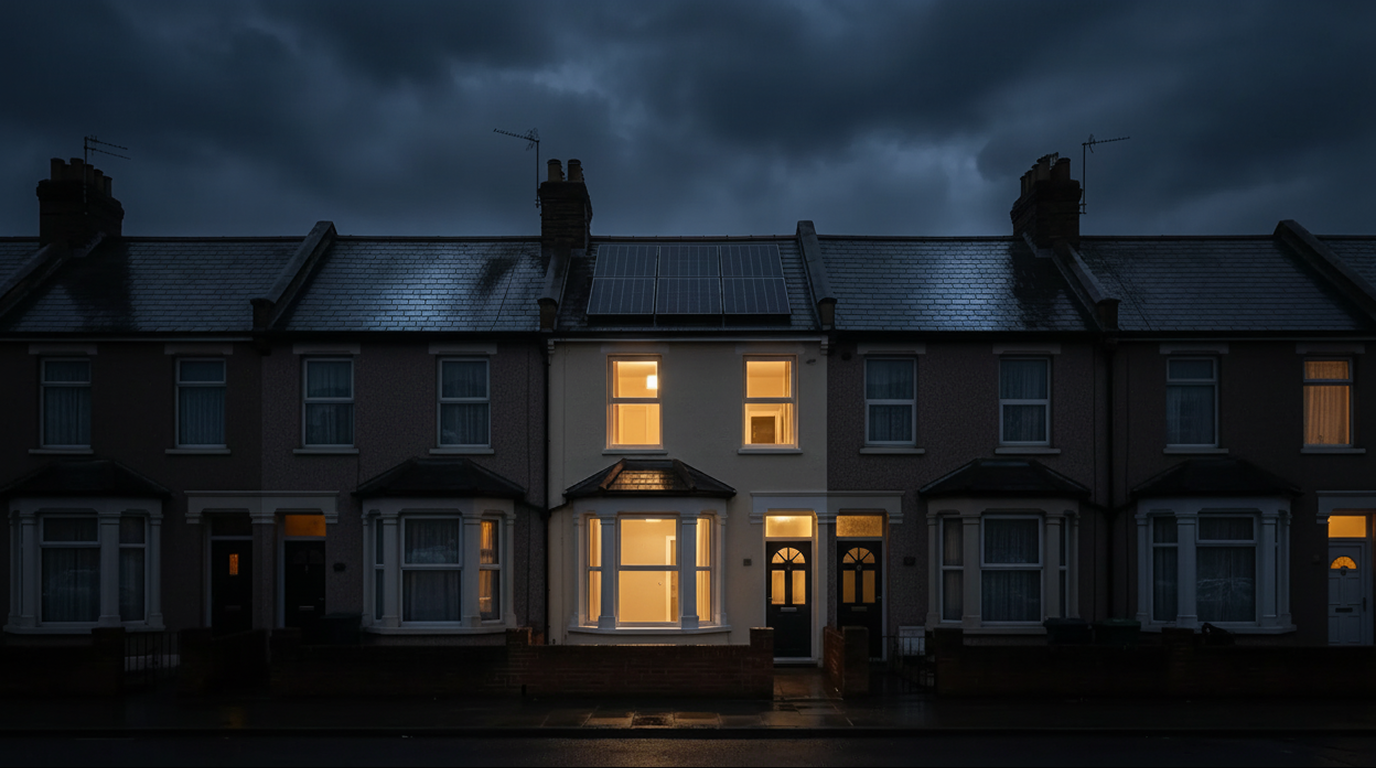
If your home has a standard grid-connected solar panel system, your panels will automatically stop supplying power when there is a power cut. Your lights will go off, your appliances will stop, and your home will be without electricity in the same way as other homes on your street — even if the sun is shining.
This is true whether your system is new or old, large or small. Unless it has been deliberately designed to provide backup power, a grid-connected solar system cannot operate during an outage.
Why do solar panels turn off during a power outage?
At first glance, this can feel confusing. Solar panels generate electricity on your property for your home. So why can’t that electricity simply stay within your house when the grid goes down?
The answer lies in safety regulations that protect both homeowners and electricity network engineers.
In the UK, all grid-connected solar systems must comply with strict electrical standards, including G98/G99 regulations and BS 7671 wiring rules. These rules require systems to shut down automatically when the grid fails. This safety function is known as anti-islanding.
When there is a power cut, engineers may be working on nearby power lines to restore electricity. Those lines must be completely de-energised while repairs are underway. If solar systems continued generating and feeding electricity into the network, those “dead” lines could unexpectedly become live again, creating a serious risk of electric shock or fatal injury.
To prevent this, your solar inverter constantly monitors the grid’s voltage and frequency. If it detects that the grid is unstable or offline, it disconnects your home from the network in a fraction of a second. When that happens, your solar panels stop supplying usable power.
This isn’t optional, and it isn’t something installers can bypass. It is a legal and essential safety requirement.
Does this mean solar panels are useless in a blackout?
Not at all.
It simply means that most standard systems are not designed to operate independently of the grid. However, modern solar technology offers several ways to maintain some level of power during an outage — provided the system is designed with that purpose in mind.
To understand your options, it helps to look at the different ways solar systems can be configured.
Different types of solar setups
Off-grid systems
Off-grid solar systems are not connected to the national electricity network at all. These are most commonly found in remote locations such as cabins, farms, or rural properties where grid access is unavailable or impractical.
In an off-grid system, solar panels generate electricity, which is stored in batteries. An inverter then supplies power to the home whenever it is needed. Because there is no grid connection, these systems are unaffected by power cuts.
While off-grid systems offer complete independence, they require large battery storage and careful energy management. For most UK homes, fully off-grid living is expensive and unnecessary, which is why it remains a niche option.
Standard grid-connected solar systems
This is the most common setup in the UK.
In a grid-connected system:
-
Solar panels generate electricity during daylight hours
-
Your home uses that electricity first
-
Any excess is exported to the grid
-
The grid supplies electricity when solar generation is insufficient
This arrangement works efficiently and keeps costs down, but it relies on the grid being present. When the grid goes down, the inverter shuts off, and your solar system stops supplying power to your home.
Solar with battery storage and backup power
Many modern solar installations now include a battery, which stores surplus solar energy instead of exporting it all to the grid. Batteries allow you to use more of your own electricity in the evening and overnight, improving self-consumption and reducing bills.
However, not all batteries provide power during a blackout.
For backup power to work, the system must also include:
-
A hybrid or battery-capable inverter
-
A backup or Emergency Power Supply (EPS) function
-
Additional wiring to supply selected circuits during an outage
When configured correctly, this setup allows your home to safely disconnect from the grid and continue operating as a small, self-contained power system.
What is islanding or EPS mode?
When a power cut occurs, a properly configured system with backup functionality goes through a controlled process.
First, the inverter detects the loss of grid power. It then activates a relay that physically disconnects your home from the electricity network. This step ensures no electricity can flow back into the grid, keeping engineers safe.
Once isolated, the inverter switches into island mode, sometimes referred to as EPS (Emergency Power Supply) mode. In this state, your home effectively becomes a small microgrid, powered by your battery and, when available, your solar panels.
This transition typically happens in under a tenth of a second. In many cases, sensitive electronics may not even notice the change.
What can you power during a power cut?
Backup power is designed to keep essential services running, not to replicate normal household energy use.
Most systems are set up to supply electricity to a dedicated “essential loads” circuit. This might include:
-
Lighting in key rooms
-
Fridges and freezers
-
Broadband routers and phone chargers
-
Medical or mobility equipment
High-demand appliances are usually excluded, such as:
-
Electric ovens and hobs
-
Electric showers
-
Heat pumps
-
EV chargers
The reason for this comes down to battery limitations.
Understanding battery limits
Home batteries are powerful, but they are not unlimited.
Most residential batteries store between 5 and 15 kilowatt-hours (kWh) of energy. By comparison, the average UK household uses around 10 kWh per day, often more in winter or in all-electric homes.
Batteries are also limited in how much power they can deliver at once. Many systems provide a continuous output of around 3–5 kilowatts. An electric oven alone can draw close to this amount, meaning a short period of heavy use could quickly drain the battery or overload the system.
For this reason, backup power is best used thoughtfully. With sensible management, a battery can keep essential appliances running for many hours, and potentially much longer if there is some solar generation during daylight.
Can solar panels still generate power during a blackout?
Yes — if the system is designed to allow it.
When paired with a suitable inverter and battery, solar panels can continue generating electricity during a power cut. That energy can be used directly in the home or stored in a battery for later use.
Without a battery, however, solar panels generally cannot operate during an outage. The battery provides a stable electrical reference that allows the inverter to keep running safely.
Do all batteries include backup power as standard?
No, and this is an important detail for homeowners to understand.
Some battery systems are designed purely for energy storage and bill savings. These systems still shut down completely when the grid goes down.
Backup power often requires:
-
Additional hardware
-
Extra wiring
-
Specific inverter models
-
Careful system design
There may also be additional costs involved. This is why it’s essential to discuss backup power requirements before installation, rather than assuming it will be included automatically.
Is backup solar power allowed in the UK?
Yes — when installed correctly.
Systems must meet UK electrical safety standards and be approved by the local Distribution Network Operator (DNO). Installations should also be carried out by certified professionals to ensure compliance and safe operation.
How Switch Together can help
Switch Together is a council-backed group buying scheme that helps residents install solar panels and batteries at competitive prices while ensuring systems meet UK safety and quality standards.
Through the scheme, homeowners can:
-
Learn about battery and backup power options
-
Understand what is realistically possible during a power cut
-
Get systems designed by vetted installers
-
Make informed decisions with no obligation to proceed
If resilience and peace of mind are important to you, Switch Together provides a trusted route to explore those options safely.
The key takeaway
For most homes, solar panels alone will not work during a power cut — and that is by design. Safety rules protect engineers, homeowners, and the wider electricity network.
However, with the right combination of solar panels, batteries, and backup functionality, it is possible to maintain essential power during an outage. These systems are not about running everything as normal, but about keeping the most important parts of your home operating when you need them most.
Understanding how solar really works puts you in control — and helps you decide whether backup power is something worth planning for.