Table of Contents
If you've been researching ways to cut energy bills or get more from solar panels, you've almost certainly come across the Tesla Powerwall. It's one of the most searched home batteries in the UK — so it's often where people start.
But being well-known isn't the same as being the right fit for your home. This guide uses the Powerwall as a starting point to help you understand how home batteries actually work, what they genuinely cost, and how to decide what's right for your situation — whether that ends up being a Tesla or not.
Disclaimer: This article is for informational purposes only. Product specifications and pricing are subject to change. Always verify current details directly with Tesla or a certified installer before making a purchasing decision.
What Is a Tesla Powerwall and How Does It Work?
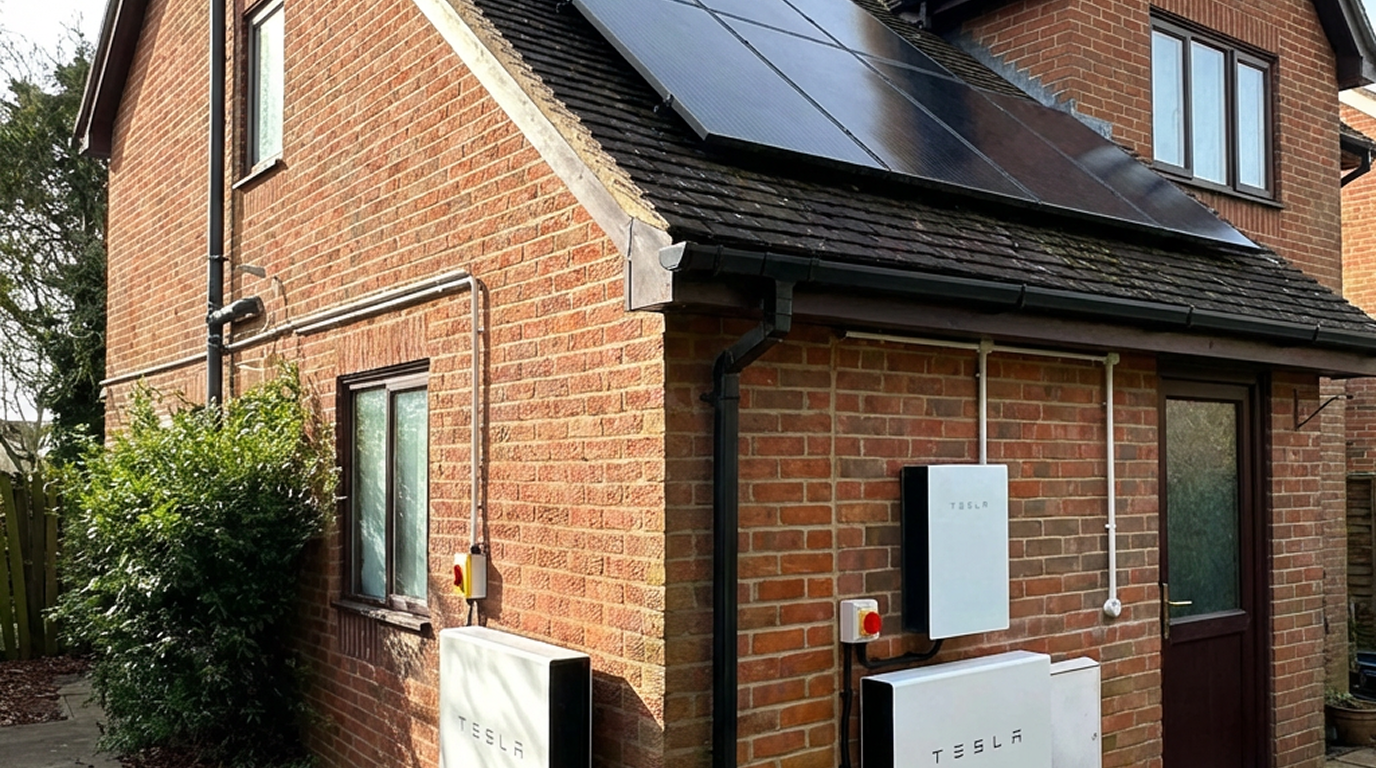
A Tesla Powerwall is a home battery system that stores electricity for use later. It's designed to work with solar panels — storing energy generated during the day so you can use it in the evening — but it can also charge directly from the grid, which is useful if you're on a time-of-use tariff with overnight rates.
The basic principle is the same across all home batteries:
- Solar panels (or the grid) generate or supply electricity
- The battery stores what you don't immediately use
- You draw on that stored energy later, reducing what you buy from the grid
Where batteries differ is in capacity, power output, software, and how well they integrate with your existing setup. Tesla Powerwall is one option in that market — a premium one, but not the only one.
Tesla Powerwall Cost in the UK
Cost is usually the first question, and it's worth being clear about what you're actually paying for.
| Cost element | Typical range (UK) |
|---|---|
| Battery unit | £6,500–£8,500 |
| Installation & hardware | £1,000–£3,000 |
| Total installed cost | £8,000–£11,500+ |
Tesla Powerwall pricing sits at the higher end of the home battery market. The final figure depends on whether you already have solar panels, what electrical work is needed, and where the unit will be installed.
It's also worth knowing that Tesla Powerwall installation must be carried out by a certified Tesla-approved installer, which limits how much you can shop around on labour costs.
Powerwall 2 vs Powerwall 3: What's Actually Different?
You'll often see both models when researching. Here's a straightforward comparison:
| Feature | Powerwall 2 | Powerwall 3 |
|---|---|---|
| Capacity | 13.5 kWh | 13.5 kWh |
| Power output | ~5 kW (7 kW peak) | ~11.5 kW |
| Inverter | External (separate unit) | Built-in |
| Battery chemistry | NMC | LFP (Lithium Iron Phosphate) |
| Installation complexity | More components | Simpler, all-in-one |
The Powerwall 3 has a built-in inverter, which simplifies installation and reduces components. The shift to LFP chemistry also generally means better long-term cycle life. If you're buying new, the Powerwall 3 is the more straightforward option. The Powerwall 2 is mainly relevant if you're looking at second-hand units.
Is the Tesla Powerwall the Right Size for Your Home?
This is where it pays to be honest with yourself rather than default to a well-known brand.
The Tesla Powerwall capacity is 13.5 kWh across both models. For context, the average UK home uses around 8–10 kWh per day. A 13.5 kWh battery can cover that, but it may be more than you actually need — and you'll pay a premium for capacity that sits unused.
The Powerwall 3's ~11.5 kW output is genuinely impressive, but most home appliances don't come close to drawing that. A typical fridge, lighting, and TV together might draw 1–2 kW. Even adding an oven or heat pump rarely pushes past 5–6 kW simultaneously.
A Powerwall is likely well-suited if you:
- Have a larger household with high daily usage (12+ kWh/day)
- Run a heat pump or charge an EV at home
- Want whole-home backup power
- Value integrated app control and smart tariff management
It may be more than you need if you:
- Have a smaller home with typical daily usage under 10 kWh
- Just want to store solar energy and shift usage to evenings
- Are primarily trying to reduce upfront cost
- Prefer a system you can expand gradually
How the Tesla Powerwall Compares to Other Home Batteries
Tesla Powerwall is premium, but the home battery market has matured significantly. Several alternatives offer strong performance at lower upfront cost — typically in the 5–10 kWh range, with 3–5 kW output, which covers the essential loads for most UK homes.
| Feature | Tesla Powerwall | Other home batteries |
|---|---|---|
| Capacity | 13.5 kWh | 5–13.5 kWh (modular options available) |
| Power output | Up to ~11.5 kW | 3–7 kW typical |
| Software | Polished app, tariff optimisation | Varies by brand |
| Installer flexibility | Tesla-certified only | Often more choice |
| Price | Higher | Generally lower |
The honest summary: if you want a high-power, integrated, app-connected system and the budget isn't the main concern, Tesla Powerwall is a strong choice. If you want to store solar energy, cut bills, and keep costs down, there are alternatives that may serve you just as well.
Want to Explore More Cost-Effective Options?
A home battery can be a significant upfront investment — and for many households, the timing isn't quite right yet. Schemes that group installations together can bring costs down meaningfully, making home batteries accessible to more people.
If you'd like to be notified when a scheme becomes available in your area, register your interest with Switch Together.
How to Think About Home Battery Installation
Regardless of brand, battery installation typically involves:
- A home energy assessment (usage, solar output if applicable, grid connection)
- System design — sizing the battery to your actual needs
- Physical installation, usually half to a full day
- App or monitoring setup
- Grid integration
The installation process for Tesla Powerwall specifically requires a certified Tesla installer. For other batteries, you have more flexibility in who you use, which can affect both cost and lead time.
What to Ask Before You Buy
Before committing to any home battery, these are the questions worth answering:
- What is my average daily energy use? (Check your smart meter or energy bills)
- Do I already have solar panels, or am I installing both together?
- What am I primarily trying to achieve? (Bill reduction, backup power, EV charging, tariff shifting)
- What's my budget for the full installed cost, not just the unit price?
- Do I want whole-home backup, or just essential loads?
These answers will tell you more about what you need than any brand name will.
Final Thoughts
The Tesla Powerwall is a well-built, high-performance home battery — and if it fits your energy needs and budget, it's a credible choice. But the best home battery isn't necessarily the most well-known one. It's the one that's correctly sized for your home, installed properly, and delivers real savings on what you actually pay for energy.
Use the Tesla Powerwall as a reference point to understand what home batteries can do. Then figure out what your home actually needs — and work backwards from there.