Table of Contents
If you've started looking into solar batteries for your home, there's a good chance GivEnergy batteries have come up. And for good reason — it's one of the UK's most visible home battery brands, with a strong track record among homeowners and a wide network of certified installers.
This guide uses GivEnergy as a detailed working example to walk you through the key decisions: what size battery you need, what a realistic installed cost looks like, and what to weigh up before you commit.
Disclaimer: Product specifications, pricing, and warranty terms are subject to change. Always verify current details with GivEnergy or a certified installer before making a purchasing decision. Pricing figures referenced are market estimates for general context only and are not quotes.
What to Think About Before Choosing a Battery Brand
Before comparing models or prices, it's worth answering a few practical questions:
How much electricity does your household use each day? As a rough guide for UK homes with solar, you want a battery capacity that's roughly half your average daily consumption. Most households use 8–12kWh per day, putting the sweet spot somewhere between 5–10kWh.
Do you already have solar, and if so, what inverter are you using? Battery compatibility often depends on your existing inverter. This is one of the most overlooked factors in battery shopping — and one of the most consequential for total cost.
Are you likely to add an EV or heat pump in the next few years? If so, modular battery systems that let you expand later could save you from having to start over.
Once you're clear on those basics, you're in a much stronger position to evaluate whether GivEnergy — or any other brand — is the right match.
What Is a GivEnergy Battery?
GivEnergy is a UK-based energy storage company with a product range that includes home batteries, inverters, EV chargers, smart plugs, and an app-based monitoring portal. Rather than selling a single product, it's built around a connected ecosystem of components designed to manage how your home generates, stores, and uses energy.
The Technology: LiFePO4 Chemistry
All GivEnergy batteries use LiFePO4 (lithium iron phosphate) chemistry — sometimes written as LFP. This is chemically stable and less prone to thermal runaway than older lithium cobalt oxide types. It's also cobalt-free, which matters for long-term cell durability.
It's worth knowing that LFP is used by most of GivEnergy's main competitors, too, including Enphase and others. In 2026, battery chemistry is rarely the deciding factor between brands. The meaningful differences tend to be capacity, warranty terms, inverter compatibility, and installer quality.
The GivEnergy Battery Range: Which Model Suits Your Home?
GivEnergy's current UK range spans from 2.6kWh at the entry level up to 13.5kWh for the All-in-One system. Here's how the main models compare:
|
Model |
Capacity |
Best For |
|
Giv-Bat 2.6 |
2.6kWh |
Small homes, tight spaces, starter storage |
|
Giv-Bat 5.12 (Gen 3) |
5.12kWh |
Smaller households, partial self-sufficiency |
|
Giv-Bat 9.5 (Gen 3) |
9.5kWh |
Mid to large homes, higher daily usage |
|
All-in-One |
13.5kWh |
High-demand homes, whole-home backup |
|
Stackable / Modular |
Variable |
Flexible needs, room to expand |
All GivEnergy Gen 3 batteries advertise 100% depth of discharge (DoD), meaning you can use the full rated capacity rather than being limited to 80–90% as with older systems. They also carry a 12-year warranty, which is strong for the current UK market.
GivEnergy 5.2kWh / 5.12kWh Battery
The Giv-Bat 5.12 Gen 3 is GivEnergy's compact option, with 5.12kWh capacity, 100Ah nominal capacity at 51.2V, and dimensions of 338 x 480 x 242mm. It weighs around 48kg. Up to five units can be connected in parallel, giving you up to ~25kWh if your needs grow.
This is typically the starting point for smaller households, modest solar systems, or homeowners who want to try battery storage before scaling up.
GivEnergy 9.5kWh Battery (Gen 3)
The 9.5kWh model is the most commonly chosen for standard UK homes — popular with customers aiming for meaningful energy independence. For a medium to large household with reasonable solar output, 9.5kWh is often enough to cover most evening and overnight usage.
GivEnergy All-in-One: The 13.5kWh System
The All-in-One combines a battery and an inverter in a single unit. The integrated design means fewer components, a cleaner installation, and fewer potential failure points. The trade-off is that if one element develops a fault, it's a more integrated product to manage than a separate battery-and-inverter setup. For homeowners starting from scratch who want a complete, future-ready system, it's GivEnergy's most capable offering.
GivEnergy Stackable Batteries
If you're unsure how much storage you'll eventually need, the modular approach is worth knowing about. Multiple units can be stacked, so you can start with 5.12kWh and add capacity later — rather than committing to a large system upfront. Particularly useful if an EV or heat pump is on the horizon.
GivEnergy Battery Prices: What Does It Actually Cost?
GivEnergy doesn't publish a fixed UK price list. Prices vary by installer, system configuration, and your existing setup. Here's a realistic market guide:
|
Model |
Typical battery-only cost (excl. installation) |
|
Giv-Bat 5.12kWh |
~£2,000–£2,500 |
|
Giv-Bat 8.2kWh |
~£2,200–£2,800 |
|
Giv-Bat 9.5kWh |
~£3,000+ |
|
All-in-One 13.5kWh |
£6,000+ (full system) |
These are market-context figures, not quotes.
Your actual GivEnergy battery installation cost will depend on:
- Whether you already have solar panels and a compatible inverter
- Whether it's a retrofit or a new installation
- The complexity of your electrical setup (single-phase vs three-phase)
- Labour costs in your area
- Any additional equipment required (gateway, cabling, consumer unit changes)
As a rough guide, installation typically adds £500–£1,500 to the hardware cost. Fully installed, most UK homeowners pay somewhere between £4,000 and £10,000, depending on system size and setup. The GivEnergy 9.5kWh battery installation cost in particular tends to come in at the lower-to-mid end of that range for a straightforward retrofit.
Rather than focusing on the sticker price alone, it's worth modelling the payback period based on your energy usage, tariff, and solar generation — that's what tells you whether the investment makes sense for your home.
GivEnergy Battery Installation: What to Expect
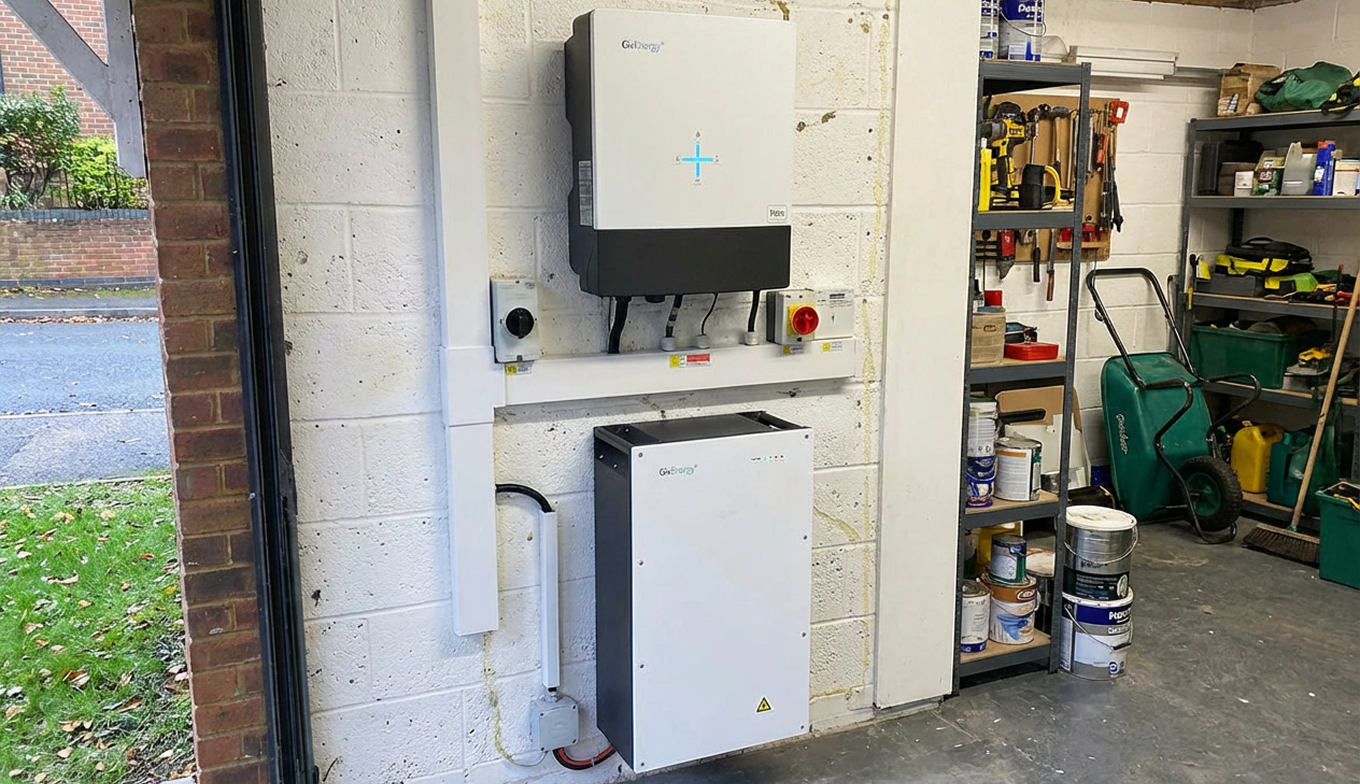
Installing a GivEnergy battery isn't a DIY job. GivEnergy's official documentation is clear: only electricians who have completed GivEnergy's approved installer training are permitted to fit its products.
This is good practice rather than bureaucracy. Home battery systems involve high DC voltages, integration with your consumer unit, and — in systems with backup capability — a gateway device that manages power flow during a grid outage. A poor installation isn't just inefficient; it can be a safety hazard.
What a good installation includes:
- Physical mounting of the battery (vertically, out of direct sunlight)
- Inverter connection and configuration
- Consumer unit integration
- System commissioning and testing
- Walkthrough of the GivEnergy portal and app
Common installation locations: Garage, utility room, external wall (weather-protected)
Before you sign off with any installer, ask:
- Are you GivEnergy-approved for this specific product?
- Does the quoted price include the inverter, cabling, and commissioning — or just the battery?
- Is my existing inverter compatible, or will it need replacing?
- If I want to add more batteries later, is this installation set up to allow that?
- What warranty does the installation itself carry, and who handles faults post-install?
GivEnergy's Gen 3 batteries carry a 12-year product warranty, but that warranty requires proper installation to be valid — another reason installer qualification matters.
What to Consider Before Choosing GivEnergy
GivEnergy is a strong option for many UK homes — but not every battery brand is the right fit for every situation. Here's an honest look at both sides.
Where GivEnergy stands out
- UK-based brand with an established installer network — support is easier to navigate than with some international brands
- LFP chemistry with 100% depth of discharge and a strong 12-year warranty
- Wide product range — from 2.6kWh starter systems up to 13.5kWh All-in-One, covering most household scenarios
- Modular design — the stackable approach lets you scale storage over time
- App-based monitoring via the GivEnergy portal is included with the system
When GivEnergy might not be the right fit
There are situations where a different battery could serve you better — and it's worth being clear about them:
You already have a non-GivEnergy solar setup. Inverter compatibility is one of the most important — and most underestimated — factors in choosing a battery. If your existing inverter isn't compatible, you may need to replace or add one, which affects the total cost significantly. Always check compatibility before committing.
Your property has a three-phase supply. Not all models in the GivEnergy range are equally suited to three-phase setups. Raise this specifically with your installer before proceeding.
You're comparing on price alone. The installer-led pricing model means you'll need quotes to get real numbers, and the total installed cost can vary considerably. Make sure any quote covers all components, not just the battery itself.
You're looking at a commercial or larger-scale installation. The specifications and considerations change significantly at that scale, and residential-focused brands may not be the best fit.
The right battery is about which system fits your home, your existing setup, and your plans — not which brand is most visible online.
GivEnergy vs Other Battery Brands
GivEnergy is worth serious consideration for many UK homeowners, but it isn't the only strong option:
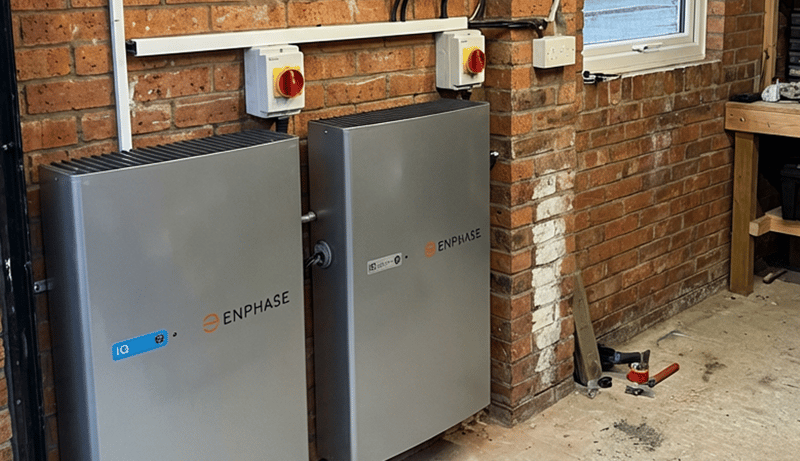
- Enphase IQ Battery 5P — a microinverter-based system that works best within the Enphase ecosystem; a strong choice if you already have Enphase solar
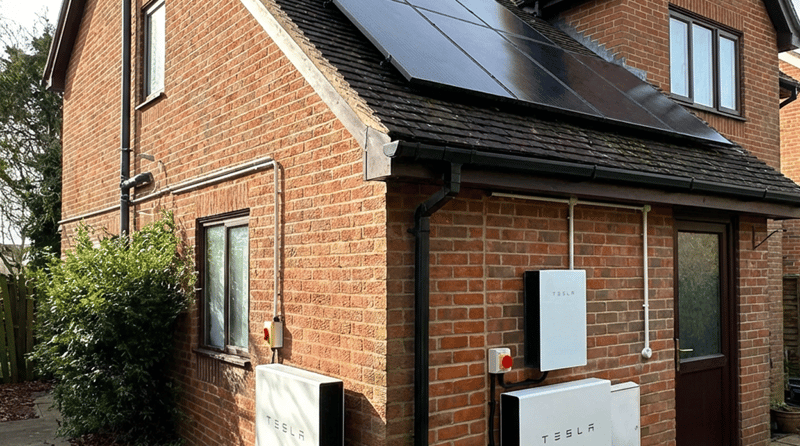
- Tesla Powerwall — higher single-unit capacity, well-known brand, premium pricing; tends to suit larger homes or those wanting a flagship product
For a full side-by-side, our guides on both batteries explore each brand in detail.
Is a GivEnergy Battery Right for You?
A GivEnergy system is likely a good fit if you:
- Already have solar, or plan to install it alongside the battery
- Use or plan to use a time-of-use tariff
- Have enough daily energy usage to regularly cycle a battery
- Want a UK brand with a well-established installer network
- Like the idea of scaling storage gradually rather than committing upfront
It's worth exploring alternatives if:
- You already have a non-GivEnergy solar setup, and inverter compatibility is a concern
- Your property is three-phase, and you need to confirm which models apply
- You're considering a commercial or larger-scale installation
The Bottom Line
GivEnergy is one of the UK's most established home battery brands, with a product range that covers most residential scenarios — from compact 5.12kWh units for smaller homes to the 13.5kWh All-in-One for higher-demand properties. The LFP chemistry, 12-year warranty, and modular design are genuine strengths.
But the best battery for your home is the one that fits your setup, your usage, and your plans — not necessarily the most well-known brand. The most important steps happen before you pick a brand: understand your energy usage, model your savings, and get quotes from certified installers who give you a total installed cost.
Researching other battery brands, too? Read our full guides on the Tesla Powerwall and Enphase battery to help you compare your options.