Table of Contents
Smart meters give you control over your energy use. Solar panels help bring your bills down. Together, they can make your home smarter, greener, and more efficient.
If you’re thinking about adding solar panels, you might be wondering: Do I need a smart meter? Will my panels work with it? And how do I make sure I get credit for the energy I send back to the grid?
Let’s break it down, step by step.
The big picture: why this matters
Solar panels generate electricity during the day. Your home uses electricity all day and night. Energy prices change throughout the day. And the grid needs flexibility to cope with demand.
Smart meters and time‑of‑use tariffs are what connect all of this. They make it possible to:
- See when you use electricity, not just how much
- Pay less by shifting some usage to cheaper times
- Get paid fairly for solar electricity you export
- Use battery storage more effectively
Put simply: they turn solar from a static system into a smarter one.
How Solar and Smart Meters Work Together
A solar PV system converts sunlight into electricity for your home. Your appliances use this energy first. Anything you don’t use comes from the grid, and any surplus can be exported. Learn more about how solar PV works.
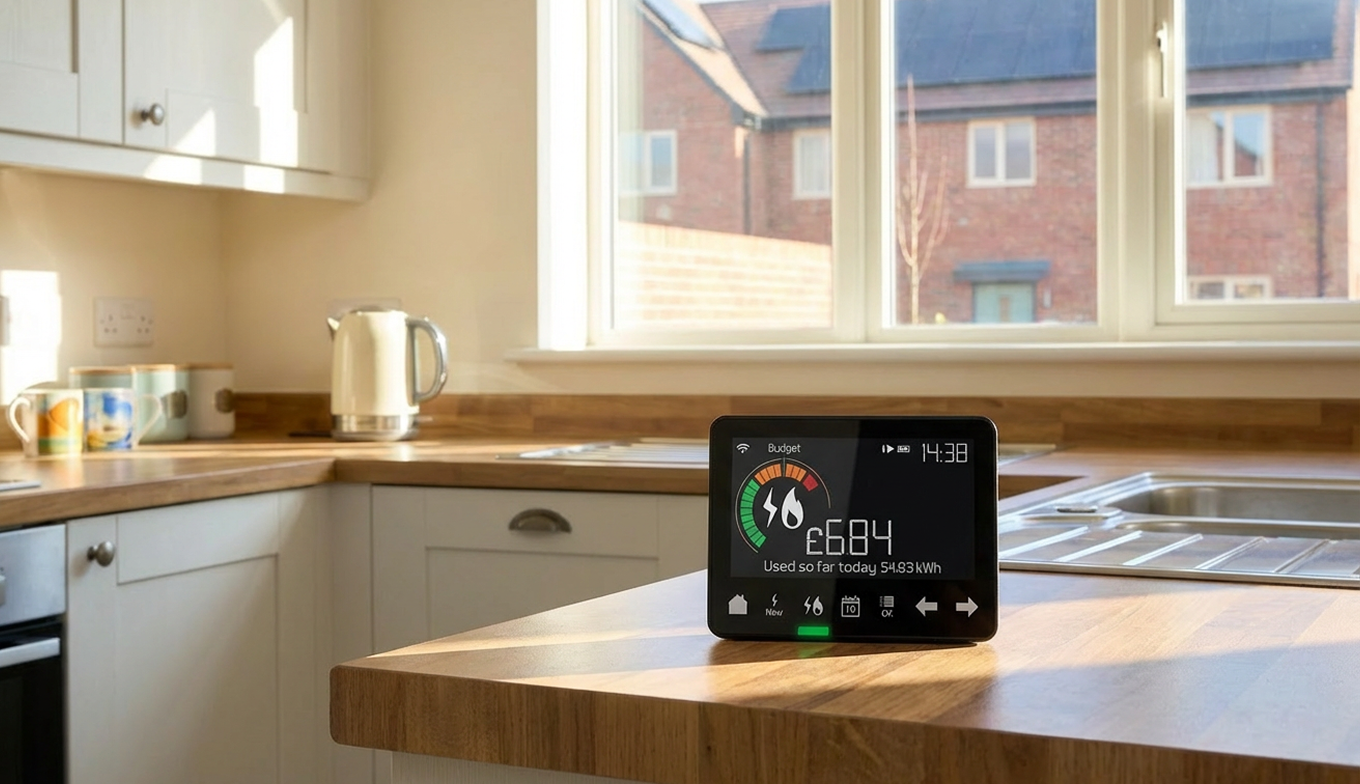
Smart meters are digital devices that measure your energy use in near real time and send readings automatically to your supplier. They can track energy coming in from the grid and energy exported from your solar panels.
The key is having a bidirectional meter, so your imports and exports are measured separately.
Inside your home, a Home Area Network (HAN) links your meter to an In-Home Display (IHD) or apps, giving you near-real-time insights on your power use and solar production.
First vs. Second-Generation Smart Meters
Smart meters come in two generations: SMETS1 and SMETS2.
-
SMETS1 meters: Some older meters can’t measure exported energy properly and might lose smart functionality if you change suppliers.
-
SMETS2 meters: These are designed for households with solar PV. They measure exports accurately and stay smart when you switch suppliers.
If your meter can’t record export, your supplier can usually replace it so you can benefit from export payments.
Time‑of‑use tariffs: electricity prices that change during the day
A time‑of‑use (TOU) tariff means electricity costs different amounts at different times of day.
Typically:
- Peak periods (often late afternoon and early evening) cost more
- Off‑peak periods (often overnight or midday) cost less
Because smart meters measure electricity use every 30 minutes, your bill reflects when you used electricity – not just how much.
This matters for solar homes because your panels already produce most of their energy during daylight hours, when prices are often lower or moderate.
How solar and time‑of‑use tariffs work together
With solar panels alone:
- You use solar electricity as it’s generated
- Any extra goes back to the grid
- If you need power later, you buy it from the grid at whatever the tariff rate is at that time
With a time‑of‑use tariff:
- You’re rewarded for using electricity when prices are lower
- You can avoid expensive peak‑time imports
A smart meter makes this possible by tracking exactly when imports and exports happen.
If you export solar electricity, you may also be eligible for an export tariff, such as the Smart Export Guarantee (SEG). We explain how this works in our export tariff SEG guide.
Getting Paid for Your Surplus Energy: The SEG
In Great Britain, the Smart Export Guarantee (SEG) requires larger suppliers to pay households for excess solar energy exported to the grid. SEG came into effect on 1 January 2020, replacing the export element of the Feed-in Tariff.
Each supplier sets its own rate. Smart meters make it easier to track exports accurately and get paid for every unit you send back.
What Your Smart Meter Does with Solar
-
Measures import – tracks how much energy you draw from the grid when your solar isn’t enough.
-
Measures export – tracks surplus PV energy sent back to the grid for SEG payments.
-
Supports optimisation – timestamped data helps you manage tariffs and energy use.
Academic research also shows that smart meters with solar PV help balance the grid and support local renewable energy communities.
Exporting solar electricity: why timing matters
When your battery is full and your home doesn’t need power, excess solar is exported to the grid.
With a smart meter:
- Exports can be measured accurately
- Some export tariffs can reflect when energy is exported
This helps align solar generation with grid needs and ensures you’re paid correctly for what you export.
Our export tariff SEG blog explains how export payments work and what to check before signing up.
Making It Work for You
-
Check your meter type (SMETS1 or SMETS2).
-
Ensure your meter can record exports if you want to benefit from the SEG.
-
Use your smart meter data to optimise energy use, save on bills, and reduce your carbon footprint.
If you’re unsure, contact your supplier or your local council’s energy support team.
Why Choose Solar with Switch Together
Even with the right smart meter, the upfront cost of solar panels can feel high. That’s why Switch Together helps households group together to access lower prices and vetted installers.
We also provide guidance for optional add-ons like battery storage, EV charge points, and insurance-backed guarantees.
Discover more about how Solar Together worksand see how joining thousands of households can make your home greener and smarter.
Takeaway
Smart meters and solar panels complement each other perfectly. They let you see your energy use, optimise your home’s efficiency, and get paid for surplus energy. With the right setup, your home works smarter, your bills are lower, and your community benefits too.