Table of Contents
If solar panels have been on your mind, one of the first questions is usually a practical one: Will my roof actually work?
The good news is that the vast majority of UK homes are suitable. Most roofs — across a wide range of orientations, pitches, and materials — can support a solar PV system. What varies is how the specifics of your roof affect output and installation cost, not whether it's possible at all.
This guide walks through the key things to look at, what they mean in practice, and what an installer will assess when they visit your home.
The Seven Factors at a Glance
Here's a quick overview before we go into each one in detail.
|
Factor |
What to know |
Impact |
|
Orientation |
South-facing ideal; east/west work well; north not recommended |
High |
|
Shading |
Unshaded is best; partial shade can be managed with optimised systems |
High |
|
Pitch |
30–40° ideal, but 10–60° is workable; flat roofs possible too |
Medium |
|
Material |
Most materials are fine; thatch, asbestos, and glass are exceptions |
Medium |
|
Condition |
The roof should be structurally sound before installation |
High |
|
Size |
Minimum ~6.4 m² for 4 panels; ~26 m² for a typical 4 kWp system |
Medium |
|
Planning |
Permitted development in most cases; listed buildings/conservation areas may need permission |
Medium |
1. Roof Orientation
Orientation is the single biggest factor in how much electricity your roof will generate — so it's worth understanding clearly.
South-facing is the ideal roof orientation for solar panels. Panels facing south receive direct sunlight for the longest part of the day, which means they generate more electricity overall. If your main roof faces south and has reasonable space, you're starting from a strong position.
East- and west-facing roofs are also well worth considering. An east-facing roof captures the morning sun; a west-facing roof catches the afternoon and evening. Both orientations typically generate around 15–20% less than south-facing over a year — but that still adds up to a meaningful saving on your electricity bills, and for many households the numbers work well.
North-facing roofs are the one orientation that generally doesn't work for solar. Output is too low to make the investment worthwhile in most cases, and Switch Together's accredited installers won't recommend a north-facing system as a result.
One thing worth knowing: most homes have more than one roof plane. Even if your front roof faces north, your rear or side roofs might face south or east — and those could be perfectly viable. It's worth thinking about all the roof surfaces available to you, not just the most visible one.
2. Shading
After orientation, shading is the factor that most affects how much electricity your panels will generate. Solar PV systems can still produce power when partially shaded — but consistent, heavy shading will reduce output significantly.
The most common sources of shading on UK roofs are trees, chimney stacks, neighbouring properties, and dormer windows. It's worth looking at your roof at different times of day — a chimney that doesn't cast a shadow at noon might shade a quarter of your roof in the afternoon.
If your roof has some shading but not a great deal, an optimised system can help. Installers can use microinverters or power optimisers to minimise the effect of shading on individual panels, so that a shadow on one panel doesn't drag down the output of the whole array. Your installer will assess this during their survey and let you know what makes sense for your roof.
If your roof is heavily shaded for most of the day, it's better to know that upfront — an honest installer will tell you if the numbers don't stack up.
3. Roof Pitch
The pitch — or slope — of your roof affects the angle at which panels sit, which in turn affects how efficiently they capture sunlight throughout the year.
The ideal pitch is between 30° and 40°. Fortunately, this is exactly the range most UK homes fall into — so the majority of sloped roofs are well matched to solar from the outset.
Roofs outside this range can still work. Shallower pitches (down to around 10°) and steeper ones (up to around 60°) are both viable — output may be slightly lower, but for most households the difference is modest. Your installer will calculate the expected yield based on your specific roof angle.
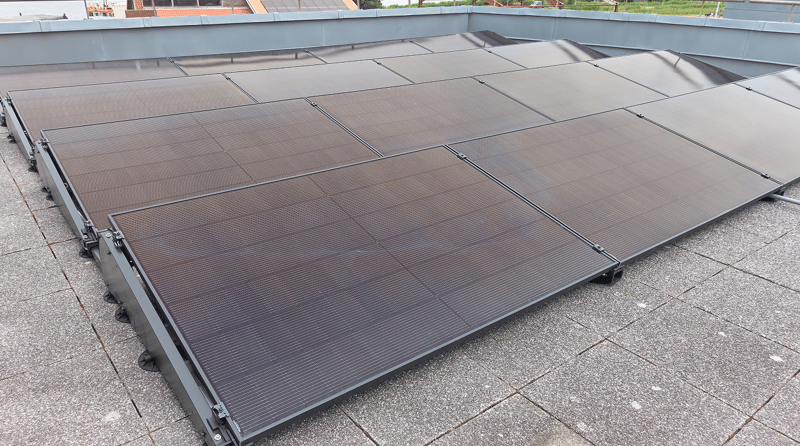
If you have a flat roof, solar panels can still be installed — they're typically mounted on angled brackets to achieve an optimal pitch. We've covered flat roof installations in more detail in our dedicated flat roof solar panels guide →
4. Roof Material
Solar panels can be installed on almost every common UK roof material. The type of material mainly affects how the mounting system is fixed, and occasionally the installation cost, but it rarely rules a roof out entirely.
Materials that work well
- Concrete and clay tiles — the most common UK roof type, and straightforward to install on.
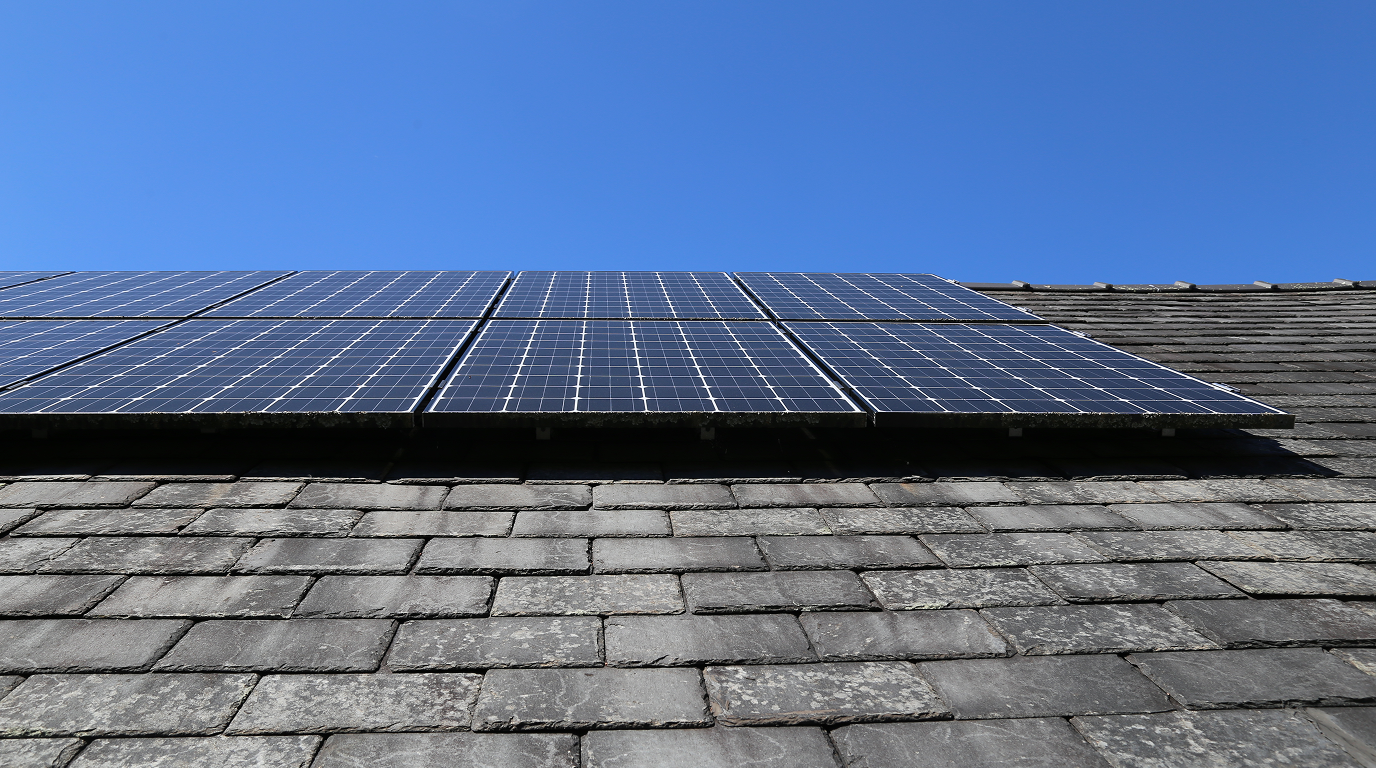
- Slate — solar panels on a slate roof are very common in the UK. Installers use slate-specific hooks designed to avoid damaging the tiles. It works well, though installation can take a little longer.
- Asphalt / composite — durable and easy to work with; often the most straightforward installation.
- Metal roofing — excellent for solar. Metal roofs often allow for a simpler, lower-cost mounting system.
Materials that need special consideration
- Concrete flat roofs / felt / tar / gravel — all workable for solar, typically with a ballasted or angled mounting system. See our flat roof guide for more details.
- Wood shingles — installation is possible, but may require additional checks on fire safety protocols.
Materials where solar panels aren't suitable
- Thatch — solar panels cannot be installed on a thatched roof due to fire risk.
- Asbestos — if your roof contains asbestos, this needs to be safely removed by a specialist before any solar installation can take place.
- Glass — glass roofs (such as conservatory roofs) aren't structurally suitable for a standard solar PV system.
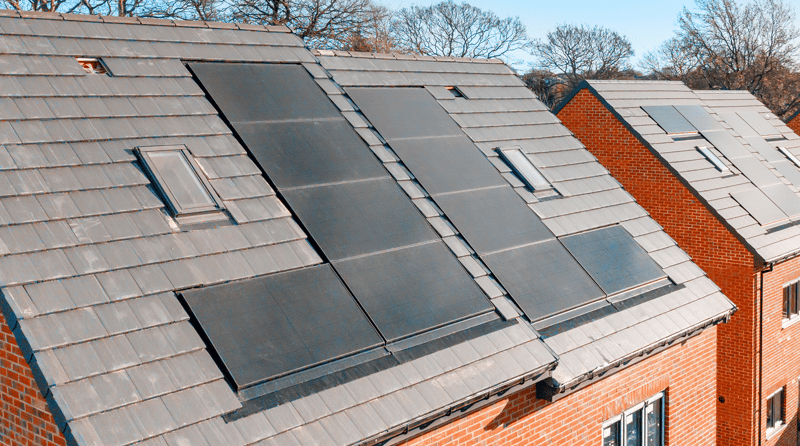
If you're interested in a more integrated look — where panels sit flush within the roof rather than on top of it — in-roof and integrated solar panel systems are worth exploring separately, as they have different installation requirements.
5. Roof Condition
Even a roof with the ideal orientation, pitch, and material needs to be in good structural condition before solar panels are installed. Panels are designed to last 25–30 years — and you want the roof underneath them to be in good shape for at least that long, too.
During the pre-installation survey, your accredited installer will check the structural integrity of your roof. If they find damage, missing tiles, or signs of deterioration, they'll flag this before any installation goes ahead.
|
Worth knowing If your roof needs repair or replacement work, it's worth completing that before getting solar panels installed. Removing and reinstalling a solar array to access the roof underneath adds cost and complexity. Getting the roof right first keeps things straightforward. |
6. How Many Solar Panels Can You Fit on Your Roof?
Roof size determines how many panels you can install, which in turn affects how much electricity you can generate and how quickly your system pays for itself.
As a rough guide, each standard solar panel takes up around 1.6 m² of roof space. The minimum installation through Switch Together's group-buying scheme is 4 panels, which requires around 6.4 m² of usable roof space. A typical 4 kWp system — the most common size for a UK family home — uses around 10–12 panels and needs roughly 26 m² of clear roof space.
Bear in mind that usable space isn't the same as total roof area. Skylights, chimney stacks, roof vents, and dormer windows all reduce the space available for panels. A good installer will work around these features where possible, but it's useful to have a rough sense of how much clear space your roof actually has before your survey.
If your main roof doesn't have enough space, it's worth thinking about other structures too. Garage roofs, extensions, and outbuildings can all be viable locations for solar panels, as long as they're structurally sound and have a suitable orientation.
|
How many panels do you need? The right system size depends on your household's electricity use, not just your roof. Our guide to solar panel system sizing goes into this in detail. |
7. Planning Permission
For most UK homeowners, solar panels fall under permitted development rights — which means you don't need to apply for planning permission before installing them.
There are a few exceptions to be aware of:
- Listed buildings — planning permission is likely to be required. Check with your local planning authority before proceeding.
- Conservation areas — panels on the principal elevation (the part of your home visible from the road) may require permission. Panels on a rear or side roof often don't.
- Flats and maisonettes — permitted development rules are different for flats; you may need permission even outside a conservation area.
If you're unsure whether your property falls into any of these categories, your local authority can confirm it — and it's better to check early, as approval can take several weeks. Your installer will also be able to advise based on your specific situation.
On-Roof vs In-Roof Solar Panels
Most solar installations in the UK use panels mounted on top of the existing roof — a straightforward and cost-effective approach that works on the vast majority of roof types.
There's also a growing interest in in-roof (or integrated) solar panels, where the panels replace a section of the roof tiles rather than sitting above them. This gives a cleaner, more flush appearance and can work well on newer builds or homes undergoing a roof replacement. The installation cost is typically higher, and the roof material requirements are slightly different.
If the integrated look appeals to you, it's worth exploring as a separate conversation with your installer. We cover in-roof and integrated solar panels in more detail here →
What Happens During the Roof Survey?
Before installation, every Switch Together customer receives an on-site survey from their accredited installer. This is where all of the factors above get assessed properly — for your specific home, not a generic one.
During the survey, your installer will check:
- Roof orientation and any shading from nearby trees or buildings
- The pitch and structural condition of the roof
- The roof material and how the panels will be fixed to it
- Available space and the best layout for your panels
- Access requirements and any scaffolding needed
- Your fuse box and whether any electrical work is required
After the survey, you'll receive a confirmed system design and a final quote. If your installer identifies anything that would prevent installation — or would add cost — they'll explain this clearly before you commit.
The survey is a genuinely useful step, not just a formality. It's the point at which everything becomes specific to your home.
So — Is Your Roof Suitable?
For most UK homeowners, the answer is yes. The combination of roof type, orientation, and condition that makes solar unworkable is relatively rare. More often, the question isn't whether your roof is suitable — it's understanding how its specific characteristics will shape the system that's right for you.
The clearest way to find out is a site-specific assessment. Everything else, including this guide, is a useful starting point — but an installer looking at your actual roof will give you a far more accurate picture.
|
Ready to find out what your roof can do? Switch Together connects homeowners with vetted, accredited installers through a group-buying scheme designed to make solar more accessible. There's no obligation — just a clearer answer about what's possible for your home. Find out how it works → |