Table of Contents
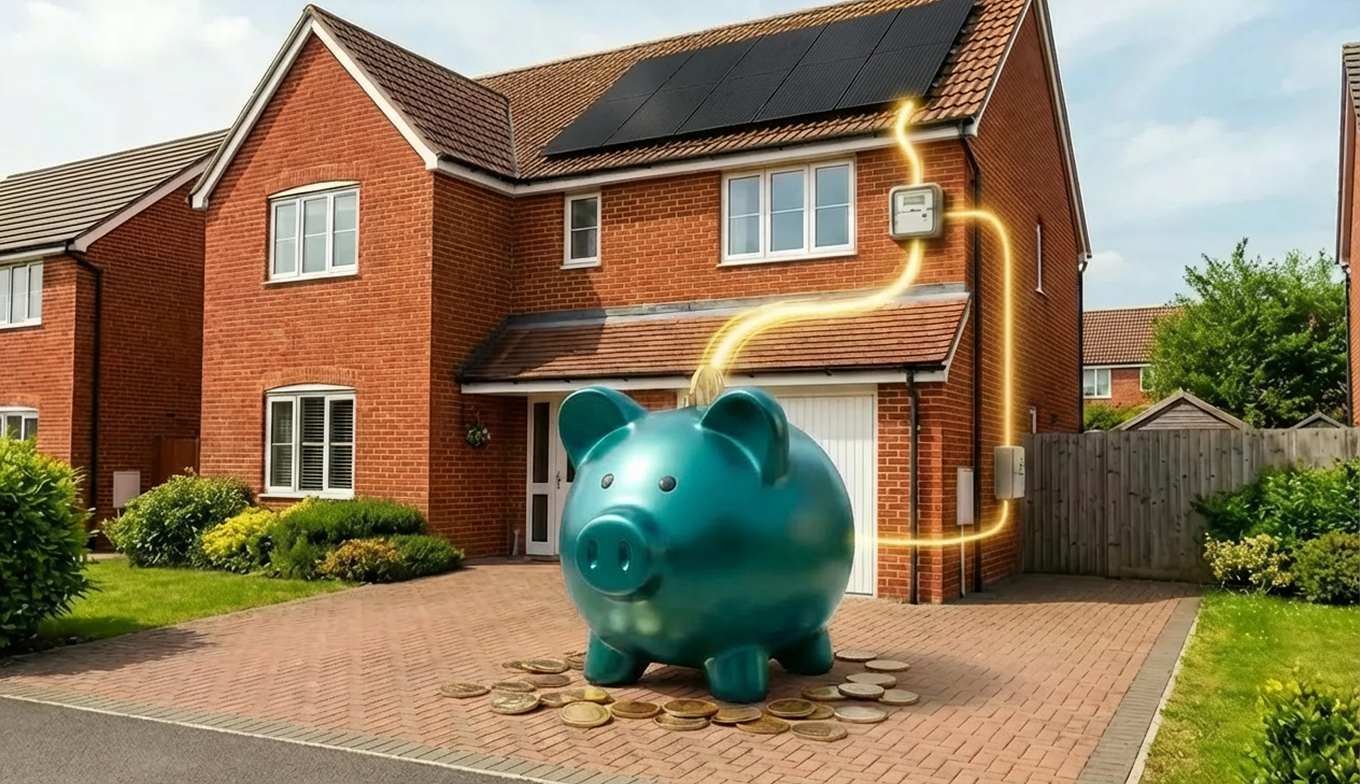
Installing solar panels is no longer just an environmental decision — for many homeowners, it’s a long-term solar investment.
Like any investment, the big question is return: how long until solar panels pay for themselves?
In this guide, we break down solar panel ROI, explain how to calculate your solar energy return on investment, and help you decide whether investing in solar energy makes financial sense for your home in the UK.
A quick note:
This article is designed to help you understand how solar panels can work as a long-term home investment, but it’s not personal financial advice. Everyone’s situation is different, and the costs, savings, and payback times for solar panels can vary depending on your home, energy use, and future energy prices. Before making any big financial decisions, it’s always a good idea to think about what’s right for you and, if needed, speak to a qualified financial adviser.
What Is Solar Panel ROI?
Solar panel ROI (return on investment) refers to how much value your system delivers over its lifetime compared to what you pay upfront.
There are two key variables that determine solar panel ROI:
-
How much you pay upfront
-
How much you save or earn each year
Unlike stocks or savings accounts, the return on a solar investment comes mainly from:
-
Lower electricity bills
-
Payments for exported energy (SEG)
-
Increased property value
Once your system has “paid for itself”, the electricity it generates is effectively free — which is why solar is often described as a low-risk, long-term investment.
Increased property value
First things first, in the same way that adding an extension or getting a new kitchen makes your house worth more, solar panels immediately add value to your home. According to research by Solar Energy UK, “Analysis of more than five million property sales shows that installing PV on a typical home could increase its value by £1,891—£2,722. Solar property commands a price premium of c.0.9%—2%. This means that the sale price of a home can be increased by half the cost of installing a PV system itself.”
Of course, your house value depends on lots of things. But if you're thinking of selling in the next few years, installing solar panels could be a good way to get a higher price.
Lower electricity bills
Solar panels save you money on your electricity bill, which is the biggest driver of a strong solar panel return on investment over time.
When you use solar energy, you're not using energy from the grid that you would have to pay for. In most cases, the savings may seem small on a short-term basis, but over time, those savings add up. And if you live in an area with high electricity prices, your savings could be even greater.
Earning Money Through the Smart Export Guarantee (SEG)
If your panels produce more electricity than you use, you can sell the excess back to the grid through the Smart Export Guarantee (SEG).
Over the lifespan of a system, SEG payments can add up to thousands of pounds — significantly boosting your solar energy return on investment.
How Long Until Solar Panels Pay for Themselves?
Investment Break-Even
The solar panel payback period is the time it takes for your savings and earnings to equal your installation cost.
A simple way to estimate it:
-
£5,000 system ÷ £600 annual benefit ≈ 8 years
-
£4,500 system ÷ £500 annual benefit ≈ 9 years
-
£4,000 system ÷ £400 annual benefit ≈ 10 years
Most UK systems now pay for themselves in 5–10 years, depending on usage, energy prices, and installation cost.
Importantly, this doesn’t factor in inflation or future energy price rises — both of which tend to shorten the real payback period.
The long-term picture
Most solar panels often last 25–30+ years, which means many homeowners enjoy 15–20 years of savings after breaking even.
How to Improve Your Solar Panel ROI
While solar panels already offer strong long-term value, there are several factors that can significantly speed up your break-even point. From reducing upfront costs to getting more value from the energy your system produces, small decisions can make a big difference to your overall return on investment.
Below are the key factors that can help your solar panels pay for themselves faster.
1. Lower installation costs
When assessing any long-term investment, the upfront cost plays a major role in how quickly you see a return. The less you pay to install your solar panels, the sooner they can break even.
This is where group-buying schemes like Solar Together can make a real difference. By bringing households together and purchasing in bulk, group buying helps reduce installation costs without cutting corners on quality. A lower starting cost means your savings and earnings catch up faster — improving your solar panel ROI from day one.
2. Higher electricity prices
Rising electricity prices actually work in favour of solar panel owners.
Every unit of electricity you generate and use yourself is a unit you don’t have to buy from the grid. As energy prices increase, the value of those savings increases too — shortening your payback period and boosting your overall return on investment.
In other words, the higher electricity prices go, the more valuable your solar energy becomes.
3. Using more of your solar energy at home
One of the most effective ways to improve solar panel ROI is to use as much of the electricity you generate as possible, also known as mazimising solar self-consumption.
Running appliances like washing machines, dishwashers, or EV chargers during daylight hours allows you to rely less on grid electricity and get more value from your system. The more solar energy you use at home, the less you export or waste — and the faster your investment pays back.
4. Adding battery storage
Battery storage takes self-consumption a step further.
Instead of exporting unused solar energy during the day, a battery lets you store it and use it later in the evening or at night. This reduces your reliance on the grid even more and increases the amount of solar energy that directly offsets your electricity bills.
While batteries add to the upfront cost, they can significantly improve long-term savings and strengthen your overall solar energy return on investment.
5. Choosing the right SEG export tariff
If you do export solar energy to the grid, being on the right Smart Export Guarantee (SEG) tariff matters.
SEG payments vary between energy suppliers, and choosing a better-paying tariff can noticeably increase the income your system generates each year. Over time, these payments add up — helping your solar panels pay for themselves sooner and improving your long-term ROI.
So, Are Solar Panels a Good Investment for UK Homeowners?
For many households, the answer is yes — especially if you pay higher electricity prices, have a well-positioned roof, use a reasonable amount of power during the day, and plan to stay in your home for several years.
In these situations, investing in solar energy can deliver predictable, long-term returns. Savings build steadily through lower energy bills and SEG payments, while rising electricity prices often make solar even more valuable over time.
Beyond the financial benefits, solar panels also offer protection against future energy costs, add value to your home, and reduce your carbon footprint. And once your system has paid for itself, it can continue generating low-cost, clean electricity for decades.
Taken together, this makes solar panels one of the most reliable and future-proof home investments available to UK homeowners today.
Invest in Solar Panels Through Solar Together
Solar Together is a group-buying scheme that makes solar panels and batteries more affordable and accessible.
By joining with others in your area, you can:
-
Access discounted installation prices
-
Use vetted, high-quality installers
-
Add battery storage or EV charging
-
Benefit from insurance-backed guarantees
If you want to reduce energy bills, improve your home’s value, and strengthen your long-term finances, investing in solar energy through Solar Together could be the right next step.