Table of Contents
Solar panels are a smart way to save money and cut your carbon footprint. But did you know birds can actually affect how well your panels perform?
Nesting under or around your solar panels can cause damage, reduce energy output, and create safety concerns. Here’s what homeowners need to know about protecting their solar installation safely and effectively.
Why Bird-Proofing Matters
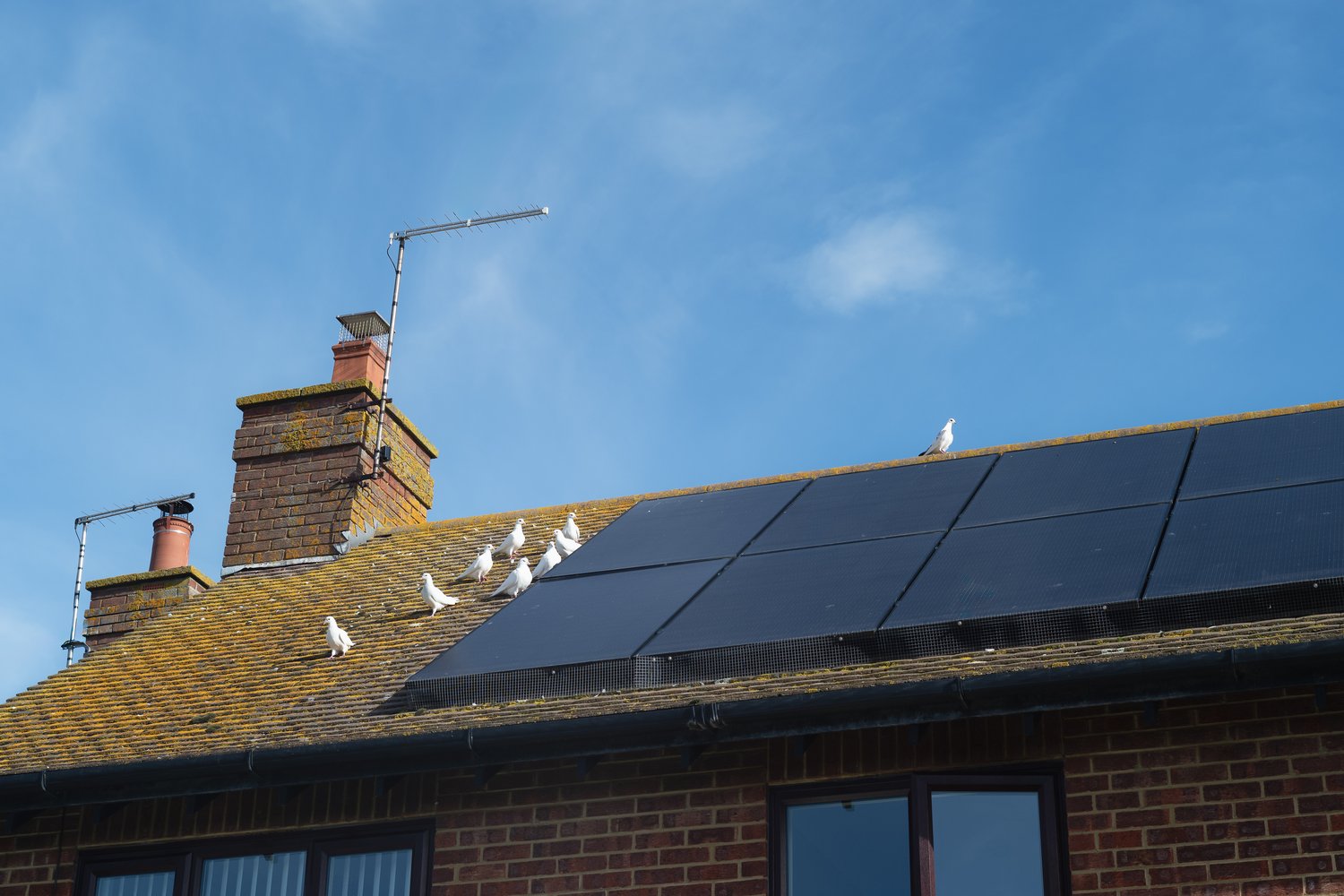
Birds are naturally drawn to solar panels because they create a warm, sheltered space protected from rain, wind, and predators. While it’s ideal for them, it can cause problems for your system:
-
Reduced efficiency: Droppings, feathers, and nests can shade panels, trapping heat and lowering energy output by up to 30% in severe cases.
-
Wiring damage: Birds may peck at cables, risking shorts or fire hazards.
-
Physical damage: Debris and nests add weight, stress panels, and can corrode surfaces over time.
-
Health and safety risks: Droppings carry bacteria and mites, while nests near wiring may pose fire hazards.
In the UK, gulls, pigeons, and starlings are the most common culprits, especially in urban or coastal areas.
How to Bird-Proof Your Panels
If you’re considering bird-proofing, it’s important that any modifications or additions to your solar system are carried out by a qualified professional.
Climbing onto your roof can be dangerous, and incorrect installation may damage panels, affect warranties, or create safety risks. For these reasons, bird protection should always be installed by accredited installers experienced in working with solar systems.
Common professional solutions include:
Mesh Barriers
UV-stabilised mesh fitted around the edges of panels prevents birds from accessing the space underneath while maintaining airflow. This is one of the most effective long-term solutions.
Solar Skirts
Colour-matched metal barriers create a clean, discreet perimeter around panels to block nesting access points.
Netting (For Severe Cases)
Full-coverage netting may be used where bird activity is persistent or severe. Proper tension and secure fitting are essential, which is why professional installation is recommended.
A qualified installer will assess your roof type, system layout, and level of bird activity to recommend the safest and most appropriate solution.
DIY Vs Professional Installation
When researching bird-proofing, you may come across DIY solar panel bird protection options. While they’re often marketed as a cheaper alternative, it’s important to understand the risks involved.
DIY Installation (Not Recommended)
The risks:
- Working at height can be dangerous and requires proper safety equipment
- Incorrect fitting can leave gaps, making the protection ineffective
- Poor installation may damage panels, cabling, or mounting systems
- Modifications could affect your system warranty
- Improperly secured materials may create additional hazards in high winds
For safety and warranty reasons, we strongly recommend that homeowners not attempt to install bird protection themselves.
Professional Installation (Recommended)
Benefits:
- Safe installation by trained professionals
- Protection fitted without damaging panels or mounts
- Warranty-friendly solutions
- Thorough cleaning and safe nest removal (where legally permitted)
- Durable, properly tensioned materials designed to last
Typical cost: £300–£700 depending on system size and access requirements.
Professional installation is especially important for larger systems, complex roofs, or where bird activity is persistent.
Tip: For the best value and long-term results, bird protection should ideally be installed at the same time as your solar panels. This helps avoid additional scaffolding costs and ensures your system is protected from day one.
Checking For Bird Activity
If you suspect birds may be nesting under your panels:
- Look for droppings, feathers, or debris visible from ground level
- Monitor your energy output for unexplained drops
- Listen for scratching or movement during nesting season
Always observe from the ground. Do not climb onto your roof.
Important: In the UK, disturbing active nests (with eggs or chicks, typically March–August) is illegal for protected species. If nesting is suspected, seek professional advice before taking action.
Aftercare and Prevention
If nests have been identified, removal and any protective measures should always be carried out by a qualified professional. This ensures the work is completed safely, legally, and without damaging your solar system.
The most cost-effective approach is preventative protection installed at the same time as your solar panels. Adding bird-proofing during installation helps avoid additional access costs, such as scaffolding, and protects your system from day one.
If your panels are already installed, retrofitting protection is still possible — but it should be assessed and fitted by experienced installers to ensure it doesn’t affect performance or warranties.
Routine system checks carried out by qualified professionals can help spot early signs of nesting before damage occurs. You can also keep an eye on your energy output through your monitoring system, as unexpected drops may indicate an issue that needs professional inspection.
The Bottom Line
Bird-proofing helps protect your solar investment, maintain energy efficiency, and reduce potential safety risks. However, any adjustments to your solar installation should always be carried out by a professional.
Installing bird protection at the same time as your panels is typically the safest and most cost-effective option — helping you protect your system from day one.